THE ADVENTURE COLLECTIVE FIELD NOTES
A closer look at the journey.
The bus slips out of Durrës at dawn and the Adriatic light turns the city’s concrete into burnished copper. By mid-morning you’re already tasting your first glass on a vineyard terrace, a local guide describing the Kallmet grape as if it were an old friend. This is not a sequence of restaurants stacked by a map app—it’s a route that threads coastline, lake-shore villages, limestone canyons and centuries of culinary exchange.
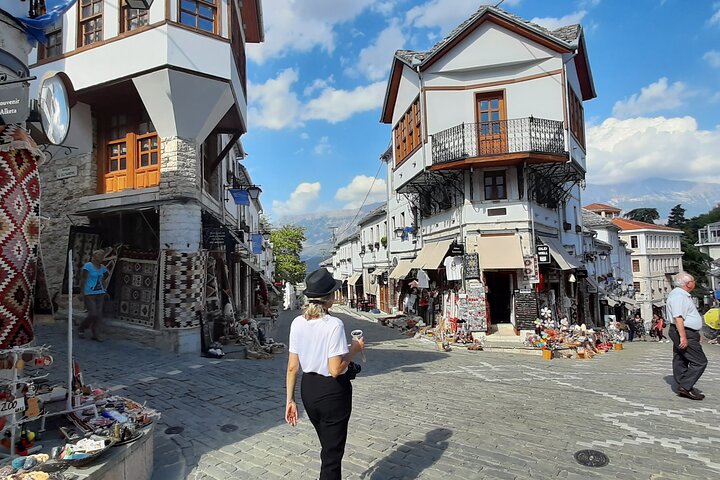
Albania’s food tells a clear story: Ottoman spice routes, Mediterranean sea salt, and the inland impartiality of pastoral life. In the west, Durrës shows Roman and Venetian layers—walk the amphitheater before dinner to feel how foreign plates arrived and stayed. Move inland to Berat and you’ll see the white facades and Ottoman-era windows that housed families who traded cheese and olives for coastal fish. The Dumre plateau’s sinkhole lakes and karst geology create microclimates where orchards and vineyards ripen earlier; Rahovec in neighboring Kosovo turns 270 days of sun into honeyed reds.
Culturally, mealtime remains central to hospitality. Family-run wineries like Uka and Çobo open their cellars and histories the way chefs open jars—slowly, with pride. Farm visits and seaside tavernas put production on full display: olive presses and the hands that still harvest by ladder; fishermen who fillet koran (speckled trout) with practiced patience—the same fish Queen Elizabeth reportedly praised decades ago.
Practicality sits beneath the romance: expect early departures for wineries and mid-afternoon restoratives at seaside hotels that offer spa downtime. Walking through bazaar alleys in Krujë or hiking the short trail to Pellumbas Cave is low-gear but uneven; comfortable shoes matter. Weather shifts quickly in mountain passes and canyons—layers are more useful than a heavy suitcase.
Bring a basic tasting vocabulary—acidity, tannin, minerality—and an appetite for rustic preparations: spit-roasted lamb in Skrapar, wood-fired flatbreads in Berat, and olive-oil-forward salads in Ndroq. Ask hosts about production methods; many small producers welcome questions and sell bottles you won’t find abroad.
Logistics: the tour runs from a central meeting point (Adriatik Hotel in Durrës) and includes private transport, most breakfasts and dinners, and guided tastings. Travelers with mobility limits should flag pickup points in advance. Bookings usually require early notice for dietary restrictions and confirm pickups 24–48 hours before departure.
At its best, this tour isn’t only about tasting: it’s about watching how place becomes flavor—limestone, sea, sun and human hands converging on a plate.
Things to know before you go
Pack comfortable walking shoes
Village lanes, vineyard rows and short hikes to caves or viewpoints are often uneven; sturdy, broken-in shoes will make tastings and strolls more enjoyable.
Notify dietary needs early
Many meals are family-style and regional; tell the operator at booking to accommodate allergies, vegetarian diets, or aversions.
Carry local cash
Smaller wineries, farmstays and bazaars may prefer lek or euros for small purchases—ATMs exist but can be sparse in remote spots.
Use the pickup options
Organizers offer hotel and airport pickup—confirm your exact pickup point 24–48 hours before the tour to avoid delays.
Your questions, answered.
What meals and tastings are included?
The tour includes most breakfasts and dinners and scheduled wine and food tastings; specific included items are listed at booking—some lunches and optional activities may be extra.
Can dietary restrictions be accommodated?
Yes—inform the operator at booking about allergies, vegetarian or other needs so hosts and restaurants can prepare alternatives.
Where does the tour start and end?
The standard meeting point is the Adriatik Hotel in Durrës; pickups from hotels and the airport can be arranged with advance notice.
Is this tour suitable for children?
Family-friendly in general, but many tastings are adult-focused; let the operator know if traveling with children to arrange appropriate meals and activities.
Do I need to bring cash?
Yes—carry some local currency (lek) or euros for small purchases at farms, bazaars and optional boat trips where cards may not be accepted.
What is the cancellation policy?
Full refund is available if you cancel at least 24 hours before departure; cancellations within 24 hours are non-refundable.