THE ADVENTURE COLLECTIVE FIELD NOTES
A closer look at the journey.
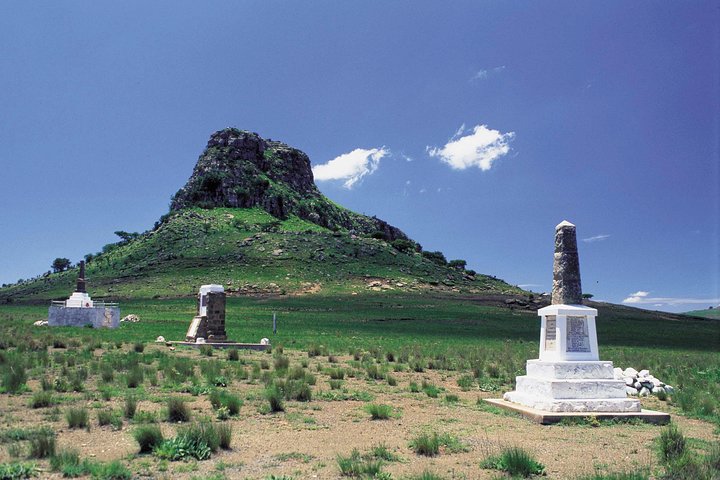
A dust-streaked road opens up into rolling grassland and the sun throws long shadows across the battlefields of KwaZulu‑Natal. Visitors arrive by coach from Durban and step out into an open plain where earth and grass still mark the lines of a day in 1879 when Zulu warriors and British troops collided.
The tour threads together three linked sites: Isandlwana, where Zulu tactics overwhelmed a British column; Rorke’s Drift, a mission station turned defensive stronghold famed for its desperate defense; and Fugitives’ Drift, with its quieter memorials and grave markers. Geology here is simple — grassy savanna on fractured Karoo shale and dolerite intrusions that shape shallow rises and drainage lines — but those low ridgelines were tactically decisive in 19th‑century warfare.
Culturally the route is layered: Zulu oral histories and British military records meet at museums and memorials, and local guides unpack how the battles reshaped regional identity and colonial policy. Expect interpretive displays, preserved trenches, and battlefield walks that balance archaeology and storytelling.
Practically, the day is long: an early Durban pickup, roughly four hours driving each way, and several short walking sections at sites (mostly flat or gently uneven ground). Bring sun protection, steady shoes, and water; guides provide context and on‑site commentary. Photography is welcomed, but treat memorial spaces with respect. The visit is accessible for most travelers, with opportunities to sit, reflect, and walk modest distances while absorbing one of South Africa’s most consequential historical landscapes.
Things to know before you go
Start early and rest on the coach
The tour departs around 6:30 AM and includes long drive segments—use the travel time to rest and save energy for on‑site walking.
Sun protection is essential
Open grassland offers little shade; bring a broad‑brim hat, sunscreen, and sunglasses to avoid heat fatigue.
Wear sturdy, flat shoes
Walking at battle sites is on uneven, sometimes rocky ground—supportive shoes reduce the chance of slips and sore feet.
Respect memorial spaces
Photography is allowed but be mindful at graves and memorials; listen to guides for culturally sensitive behavior.
Your questions, answered.
How long is the tour and what time does it start?
The tour runs about 12–13 hours with an approximate 6:30 AM pickup from central Durban locations; exact pickup is confirmed at booking.
Are admission fees and guides included?
Yes—entrance fees to key sites and a shared guide/driver are included; the tour also provides in‑vehicle historical commentary and bottled water.
Is the tour wheelchair accessible?
Many areas and transportation options are wheelchair accessible, but some battlefield paths are uneven; contact the operator ahead to discuss specific access needs.
Will there be food stops on the route?
There are scheduled breaks and a lunch opportunity at a local venue or packed lunch option; bring snacks if you have dietary preferences.