THE ADVENTURE COLLECTIVE FIELD NOTES
A closer look at the journey.
The morning drive out of Muscat thins the city into scrub and then into limestone ribs of the Al Hajar range. By mid-morning the air feels cooler and the road climbs onto the Saiq Plateau — terraces of pomegranates, roses, and stone villages clinging to steep gullies. Travelers step from an air-conditioned 4x4 into wind-swept viewpoints that look down into deep valleys and abandoned mudbrick settlements.
This route stitches together Oman's farming history and strategic past: Nizwa was once a political and religious center and its 17th‑century fort dominates the old souq. The falaj irrigation channels, visible around Birkat Al Mouz, reflect a millennia-old water-management culture recognized by UNESCO. Geologically the area is folded limestone and dolomite, carved by seasonal runoff into steep canyons and terraced benches that sustain high‑altitude orchards.
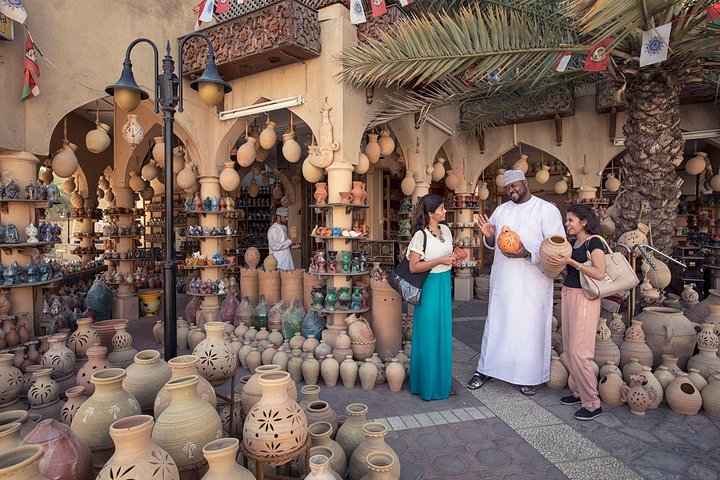
Culturally, markets in Nizwa still trade goats, spices and silver khanjars; guides explain how terraces are watered and why villages were abandoned as urban life changed. Wildlife is subtle here — mountain birds and the endemic Arabian tahr use cliffs and scree.
Practical guidance: expect a full 9‑hour day with several short walks (mostly easy to moderate footing) at roughly 2,000 meters elevation. Bring sun protection and at least 1.5–2 liters of water, and wear worn‑in walking shoes for stepped terraces and rocky trails. Timing matters: early spring and autumn give the most comfortable temperatures; summers are hot at lower elevation and can be windy up top. The tour is wheelchair‑accessible for transport, but many viewpoints and short village walks involve uneven ground.
Things to know before you go
Hydrate for altitude
Bring 1.5–2 liters of water per person; higher elevation and sun mean you’ll use more than you expect.
Layer up
Temperatures can swing between cool plateaus and hot valleys—pack a light windproof layer.
Sun protection
Strong sun and reflective rock call for a hat, sunscreen, and sunglasses even in winter.
Respect local customs
Modest dress is expected in souqs and villages—cover shoulders and knees when visiting communities.
Your questions, answered.
How long is the tour and what’s included?
The itinerary is approximately 9 hours and typically includes private 4x4 transport, an English-speaking guide, bottled water, hotel pickup and drop-off, and stops at Nizwa Souq, Nizwa Fort, Jebel Al Akhdar viewpoints, and Birkat Al Mouz.
Is the trip suitable for children or people with mobility limitations?
The vehicle transport and many sites are accessible, but expect uneven ground at viewpoints and village walks; infants must sit on laps unless a child seat is arranged.
What’s the best time of year to visit Jebel Akhdar?
Spring and autumn offer the most comfortable temperatures and blooming terraces; summers are hot at low elevations while winters are cool on the plateau and can be windy.
Are entrance fees or meals included?
Typical day tours include transport and guiding; site admissions and lunch are usually not included—confirm with the operator before booking.