THE ADVENTURE COLLECTIVE FIELD NOTES
A closer look at the journey.
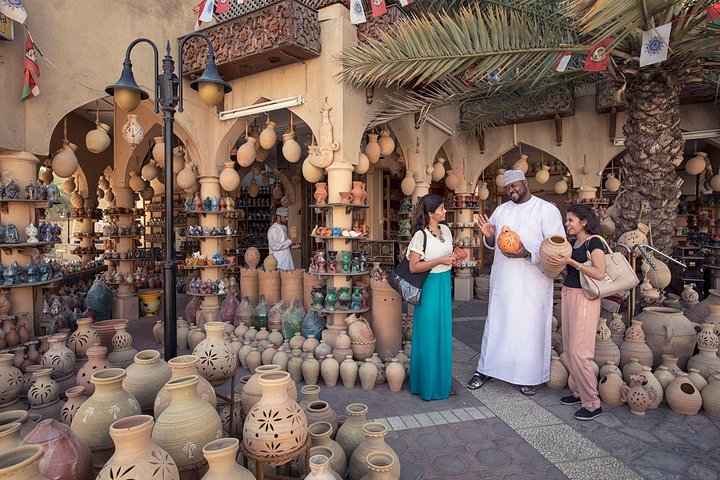
A morning departure from Muscat sweeps the group into the flank of the Hajar Mountains, where stone walls and date palms punctuate a landscape that smells of dust and cardamom. By midmorning the Nizwa souq hums with life: traders call prices, goats nudge between stalls, and the fort’s circular tower looms—quiet, watchful, and architectural in scale.
This route threads centuries of Omani history and geology. Nizwa grew as a medieval trade and learning center; its 17th-century fort sits atop earlier foundations and overlooks an extensive falaj irrigation system—the aflaj that made settlement here possible and that have UNESCO recognition. Westward, Bahla’s mudbrick ramparts record pre-modern fortress-building, while Jabreen’s painted ceilings reveal a cultured court life. Higher up, Jebel Akhdar’s terraces and Jebel Shams’ canyon carve the limestone, exposing dramatic geology and cooler microclimates.
Culturally, expect hands-on moments: bread-baking in Al Hamra’s living-house museums, cups of gahwa (Omani coffee), and the livestock market’s raw commerce on Fridays. Guides interpret social customs and the falaj engineering that shaped agricultural life.
Practicalities: the full-day excursion runs roughly 7–10 hours with pickup in Muscat and included lunch. Wear sturdy walking shoes for uneven fort steps and village lanes, sun protection for low-lying desert stretches, and a light layer for mountain stops where temperatures dip. Cash (rial Omani) helps at small stalls; bring a refillable water bottle and modest clothing for mosque and village visits. The pace is moderate, with short walks and several photo stops—ideal for travelers who want a concentrated primer on Oman’s landscapes and living heritage.
Things to know before you go
Start early for the Nizwa market
Arrive with the group’s early pickup to see the livestock market at its liveliest and avoid midday heat.
Bring sun protection and water
Much of the route is exposed—use high-SPF sunscreen, a wide-brim hat, and a reusable water bottle to stay hydrated.
Wear sturdy shoes
Fort towers and village alleys have uneven steps and loose stone; trekking-style shoes provide grip and ankle support.
Respect photography etiquette
Ask permission before photographing people in villages or markets and follow guide instructions near religious sites.
Your questions, answered.
How long is the tour and what does it include?
The tour is approximately 7–10 hours depending on the option chosen; it includes transport from Muscat, a professional guide, and lunch—some site admissions are included depending on the itinerary.
Is this suitable for children or travelers with limited mobility?
The tour is marketed as suitable for all fitness levels, but forts and village lanes often have steps and uneven ground—those with limited mobility should notify the operator before booking.
Will I need cash during the day?
Yes; carry Omani rial for small purchases in souqs, tips, and any optional admissions or refreshments not covered by the tour.
Can I combine the trip with other excursions or stay overnight?
This is a shared-day tour with hotel pickup and return to Muscat; for overnight stays in Jebel Akhdar or near Jebel Shams, contact local providers to book multi-day options.