THE ADVENTURE COLLECTIVE FIELD NOTES
A closer look at the journey.
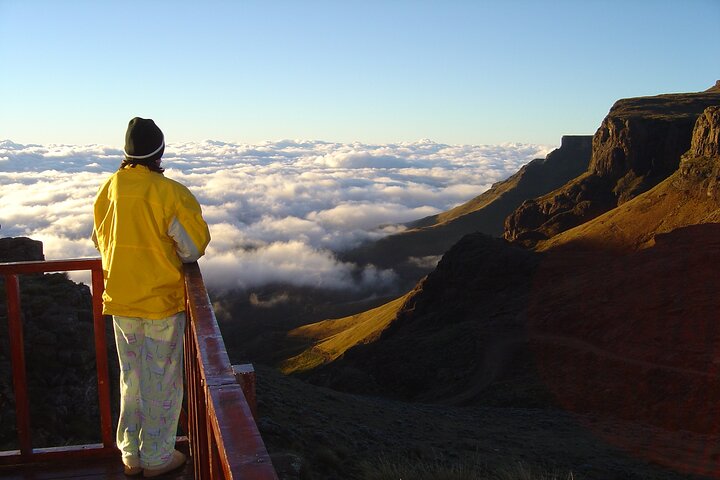
The road climbs like a living thing, yawning up from green valleys into wind-scoured rock. On day one you ride through rolling farmland and the valley of 1000 Hills to Phezulu, where Zulu song and drum open the trip; the next morning a line of 4x4s takes you up the Sani Pass, where air thins and Lesotho’s stone roofs come into view.
This route sits on the eastern escarpment of the Drakensberg, a World Heritage landscape carved by ancient erosion into jagged basalt and sandstone ramps. The Drakensberg has long been a cultural crossroads: Zulu homesteads in the lowlands, and the Basotho highlanders across the border with their distinctive blankets and mountain-baked breads.
Expect close-range geology—sheeted cliffs, talus slopes and alpine grasslands—plus wildlife that treats humans as noisy passersby: troops of chacma baboons and grazing eland are common. A stop at the Nelson Mandela Capture Site on day one ties recent history to the landscape you’ll traverse.
Practical notes: bring a passport—Lesotho is a separate country—warm layers for summit wind, and sturdy shoes for short walks at altitude. The pass is steep and gravelly; the trip uses specialist 4x4s and a driver familiar with the route. Weather can close the road, so plan flexibility into your schedule. Hydrate before the ascent, protect electronics from cold, and allow time at the summit to taste Basotho bread and photograph the wide, exposed horizon.
This two-day itinerary balances cultural visits, short guided stops, and the raw, high-mountain feel of the Drakensberg—ideal for travelers who want access to dramatic scenery without multi-day trekking.
Things to know before you go
Bring your passport
Crossing the Sani Pass reaches Lesotho; a valid passport is required at the border control stop.
Layer for sudden cold
Temperatures drop quickly above 2,800 m—pack an insulated jacket and a windproof shell.
Protect your camera gear
Wind-blown dust and cold can damage electronics—use dry bags and a lens cloth.
Plan for road delays
The pass can be closed in bad weather; allow buffer time in your travel plans.
Your questions, answered.
Do I need a passport for the Sani Pass?
Yes—Sani Pass crosses into Lesotho, an independent country, so a valid passport is required for everyone on the tour.
How difficult is the road up Sani Pass?
The road is steep, narrow and gravelly; specialist 4x4 vehicles and experienced drivers are used, so passengers do not need technical driving skills but should expect a bumpy ascent.
What altitude will we reach?
The Sani Top sits near 2,874 metres above sea level; visitors may notice thinner air and cooler temperatures there.
Can the tour be canceled for weather?
Yes—heavy snow, ice or severe weather can close the pass; operators typically cancel in advance for safety and offer refunds per their policy.