THE ADVENTURE COLLECTIVE FIELD NOTES
A closer look at the journey.
The morning light slants over ochre mud-brick walls as the road leaves Muscat behind and the Hajar range steps into view. You arrive in Nizwa to the low rumble of the souq — vendors calling, baskets of dates and pomegranates stacked under corrugated roofs — before climbing higher toward terraced orchards that earned Jebel Akhdar its name, the "Green Mountain."
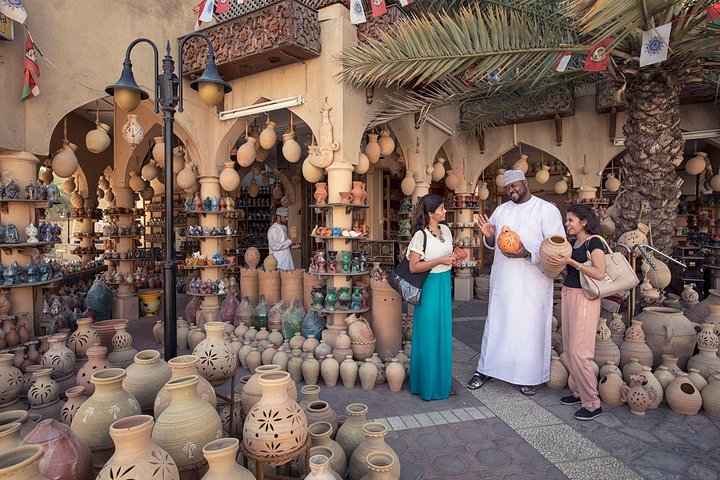
Nizwa pulses with history: its 17th-century fort, built under the Yaruba dynasty, was both defensive citadel and administrative heart. The stonework and cannon platforms read like a map of Oman's tribal and trade past, while the souq carries forward centuries of barter and craft — pottery, silver khanjars, and seasonal rose products from the mountains.
Geologically, the Al Hajar Mountains are limestone folded into dramatic plateaus; Jebel Akhdar's Saiq Plateau sits around 2,000 m, creating cooler microclimates where pomegranates, roses and stone terraces thrive. Local villages such as Birkat Al Mauz show traditional aflaj irrigation channels that still feed banana and date palms.
Practical guidance: this is a full-day drive-and-walk tour with short hillside walks and viewpoint stops. Temperatures fall with elevation — bring layers and sun protection, and plan for winding mountain roads. Photography windows open at fortress ramparts and on the Saiq Plateau; mornings are best for souq activity and late afternoon for light across the terraces.
Expect cultural immersion balanced with easy access: most stops require only short, unpaved walks but offer big payoff in views and local life. Hydrate, wear sturdy shoes for uneven village paths, and allow time to linger in Birkat Al Mouz where the green of irrigated fields contrasts sharply with the surrounding stone.
Things to know before you go
Layer for elevation changes
Temperatures drop on the Saiq Plateau—bring a warm midlayer even if the coast is hot.
Carry cash for the souq
Small vendors accept OMR cash for produce and crafts; ATMs in Nizwa but not in small villages.
Footwear for village paths
Wear sturdy, closed-toe shoes for uneven steps and loose rock in village ruins.
Plan for motion on mountain roads
If you’re prone to motion sickness, sit toward the front and bring medication—the drive includes steep switchbacks.
Your questions, answered.
How long is the drive from Muscat to Nizwa?
The drive is about 1.5–2 hours each way depending on traffic and stops; the full day tour includes multiple stops en route.
Is the tour suitable for children and seniors?
Yes—stops involve short walks and are generally accessible, but those with mobility limits should notify the operator for assistance and vehicle pickup details.
Are admissions to attractions included?
Admissions are typically not included; entrance fees for Nizwa Fort or specific sites may be payable on site—check with the operator before travel.
When is the best time to visit Jebel Akhdar?
Spring through autumn (March–October) offers rose-season activity and harvests on the plateau; winter is colder and can be misty, while summer brings warm coastal weather but cooler mountain air.