THE ADVENTURE COLLECTIVE FIELD NOTES
A closer look at the journey.
Salt air and desert heat trade places across four days in Oman: morning light hits the limestone rims at Bimmah Sinkhole, then the vehicle hums along coastal roads toward the turquoise pools of Wadi Shab where a short canyon hike and a swim through a rock crevice reward you with a hidden waterfall.
This private itinerary threads natural history and human culture. The Al Hajar range rises sharply to Jebel Akhdar (peaks to ~2,980 m; Saiq Plateau ~2,000 m) while Jebel Shams, Oman’s highest ridge (~3,009 m), carves dramatic terraces and viewpoints. Centuries-old falaj irrigation channels in the Al Hajar foothills—part of Oman’s UNESCO-listed systems—speak to an agricultural ingenuity that supported mountain villages like Birkat Al Mouz and Misfah Al Abryeen.
Coastal Sur still builds wooden dhows by hand; Ras al Hadd and nearby Ra’s al-Jinz host green sea turtle nesting (April–September peak). In the Wahiba Sands expect rolling dunes and an adventurous 4x4 dune run capped by sunset at camp, plus a night beside a low campfire.
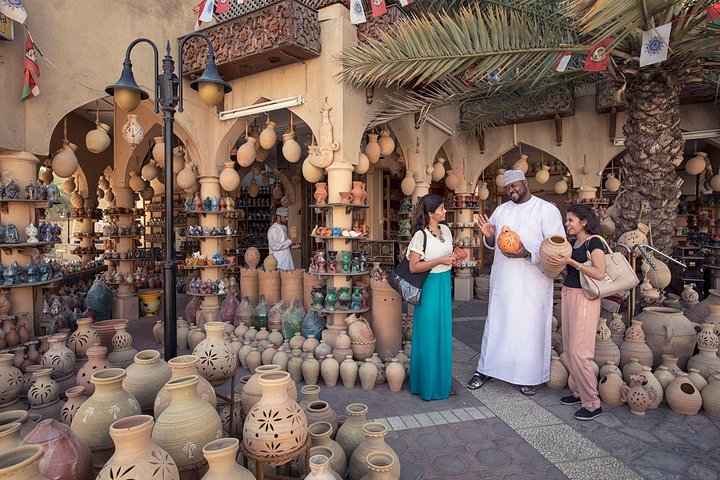
Practical edge: plan for early starts (heat avoidance), barefoot swims in wadis, and uneven stone steps at forts. Bring a reusable water bottle, sun protection, and shoes that dry quickly. Modest clothing is required in towns; have small notes for souks. Fitness demands are moderate—short hikes, dune walking, and some swimming—but the tour provides 4WD transfers and overnight lodgings, so it’s accessible to most travelers who are comfortable with basic outdoor movement and warm conditions.
Things to know before you go
Start early to beat the heat
Daily highlights are best at dawn or early morning—temperatures drop and light improves for photos.
Bring a dry bag and quick-dry shoes
Wadi Shab includes swims and a cave entry; keep electronics dry and wear footwear that grips wet rock.
Respect turtle nesting rules
If visiting Ras al Hadd/Ra’s al-Jinz, follow guides’ instructions: no flash photography and keep distance during nesting season (Apr–Sep).
Carry local currency for souks and tips
Smaller vendors and remote camps may not accept cards—have OMR in small denominations.
Your questions, answered.
Do I need a guide or permits for Wadi Shab and the wadis?
No special permits are required; guided access is recommended for navigation and safety in wadis, and most tours include a guide and transfers.
When is the best time to see nesting turtles?
Turtle nesting is most active April–September with peaks around June–August; local reserve guidelines and guided night visits maximize safety and viewing.
Is the tour suitable for children or people with limited mobility?
The tour lists as accessible for general fitness levels, but wadi swims and dune walks can challenge limited mobility—check pickup arrangements and notify operators of special needs.
What should I wear in towns and at religious sites?
Dress modestly—shoulders and knees covered in towns and souks; lightweight long sleeves and trousers are practical for sun protection and cultural respect.