THE ADVENTURE COLLECTIVE FIELD NOTES
A closer look at the journey.
Morning light slides along Muscat’s pale stone façades and the sea nudges the shoreline as your private vehicle eases into the city’s rhythm. The tour opens beneath the soaring dome of Sultan Qaboos Grand Mosque, where geometric tilework and a vast prayer hall give shape to centuries of Islamic art and devotion.
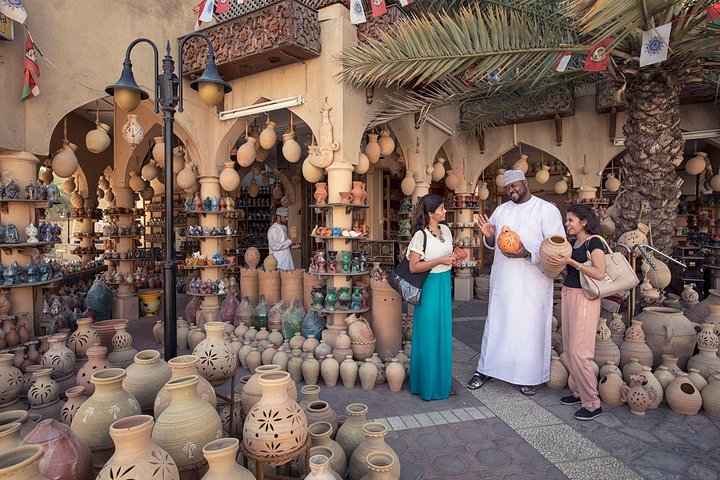
From there the route threads between modern cultural anchors and living marketplaces: a photo stop at the Royal Opera House reveals how contemporary Oman reworks traditional motifs, then the Mutrah Fish Market declares the day with fresh catch and shouted prices. Mutrah Souq’s alleyways pull you into a compact world of spices, frankincense, and silver—trade routes made tangible in scent and handcraft. Framing the city, Al Alam Palace and the 16th‑century Mirani and Jalali forts stand guard on rocky promontories, reminders of Muscat’s strategic role on the Arabian Sea.
Geology here is blunt: limestone and volcanic outcrops plunge into the Gulf, shaping narrow bays and defensive sites that have drawn traders and empires for millennia. Culture mixes Bedouin, Persian, African and South Asian threads—expect courtesy, bargaining at markets, and clear rules for modest dress at religious sites.
Practical notes: plan this in the cool morning to avoid heat, carry bottled water and a scarf for mosque entry, and wear sturdy walking shoes for cobbled souq alleys and fort ramps. Photography is welcome at public exteriors; ask before shooting people. A private guide smooths entrances and local context, turning landmark stops into a concise, memorable half‑day of Muscat.
Things to know before you go
Dress for the mosque
Women should bring a headscarf and wear long sleeves and ankle‑length bottoms; men should avoid shorts when visiting Sultan Qaboos Grand Mosque.
Start early to beat heat
Begin in the morning—temperatures spike by late morning and shade is limited at outdoor forts and the souq.
Carry local cash
Small purchases and market bargaining often work best with OMR in small denominations; cards aren’t always accepted in souq stalls.
Respect photography norms
Ask permission before photographing people and avoid shooting inside prayer areas unless explicitly allowed.
Your questions, answered.
How long is the Muscat City Excursion?
The private tour runs about 4–5 hours and covers major landmarks with short walks at each stop.
Is mosque entry included and are there dress restrictions?
Entry to Sultan Qaboos Grand Mosque is part of the itinerary; modest dress is required—women need a headscarf, long sleeves and ankle‑length bottoms; men should wear long pants and long sleeves.
Will I have time for shopping in Mutrah Souq?
Yes—there’s typically around 45–60 minutes allocated for the souq, enough for browsing and light purchases; bring small cash for bargaining.
Is this tour suitable for children or people with limited mobility?
The tour is labeled easy and suitable for most, but some stops include uneven surfaces and short stairs—notify booking about mobility needs for tailored pickup/drop‑off options.