THE ADVENTURE COLLECTIVE FIELD NOTES
A closer look at the journey.
A cold wind threads through fir crowns as the group squares their snowshoes at the trailhead, breath steaming in the clear Hokkaido air. The path follows the Noboribetsu River valley, a quiet channel in winter where ice columns hang like frozen chandeliers and the forest hush dares you to listen. Snow softens every step; the climb is steady, not steep, and the world narrows to the crunch of packed snow and the occasional drip from melting ice.
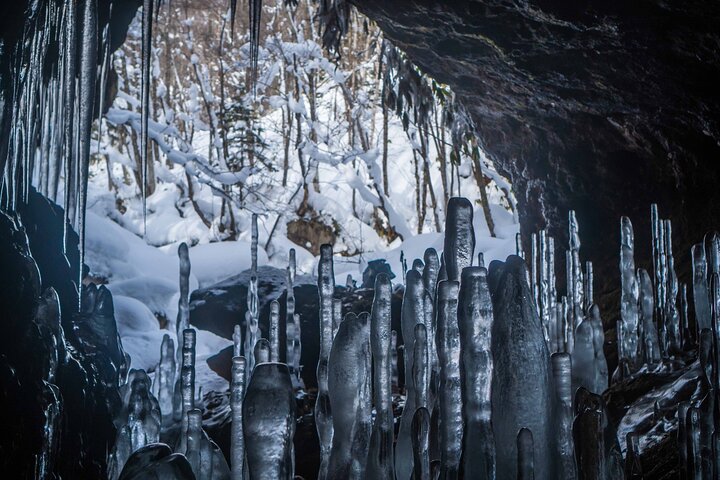
This phenomenon appears for roughly ten weeks each winter when groundwater and river spray meet subzero nights and volcanic geology. Noboribetsu’s volcanic history—hot springs and sulfuric soils—helps create the microconditions that let stalactites and stalagmites grow up to three meters. The area has long been tied to Ainu presence and to onsen culture; today visitors pair the raw cold of the caves with warm regional hospitality nearby.
Practically, expect an 8 km round-trip over varied snow: packed trail, some soft sections, and light ascending through fir and native mixed forest. Guides pause at the cavern to serve a simple hot drink and light meal while you study the ice formations and photograph from safe distances. Equipment typically includes snowshoes and poles; bring waterproof boots, layered insulating clothing, and a camera with spare batteries (cold shortens life).
Timing matters: go on a clear, cold morning for the best structural clarity and softer crowds. Respect the formations—no touching—and follow guide instructions to minimize impact. For travelers who want a concise, high-reward winter outing, this snowshoe trek delivers both spectacle and approachable alpine rhythm.
Things to know before you go
Layer for cold and exertion
Use moisture-wicking base layers, an insulated midlayer, and a windproof shell to manage body heat during climbs and stops.
Footwear matters
Wear waterproof insulated boots that fit your snowshoe bindings to avoid cold feet and blisters.
Bring spare batteries
Cold drains camera and phone batteries quickly—keep spares in an interior pocket close to your body.
Leave no trace at the caves
Avoid touching formations and pack out all waste to protect fragile ice and the valley ecosystem.
Your questions, answered.
How long is the walk to the ice caves?
The guided route is approximately 8 km round-trip with gentle climbs and is scheduled for about 6 hours including breaks.
Are snowshoes provided?
Yes—operators typically supply snowshoes and poles in a range of sizes; check availability if you require specific sizing.
Is this suitable for beginners?
Yes, for people with moderate fitness; guides lead at a steady pace and brief instruction on snowshoe use is provided.
When is the best time to see the formations?
Mid-winter during sustained cold spells—generally a roughly ten-week window—yields the most robust stalactites and stalagmites.