THE ADVENTURE COLLECTIVE FIELD NOTES
A closer look at the journey.
Dawn shakes Muscat awake and the coast road points you east, where cliffs lean over the Gulf of Oman and the wind tests the edges of your hat. The first stop is Hawiyat Najm, the Bimmah Sinkhole—a turquoise eye set into pale limestone. The rock tells a patient story here: carbonates dissolving over millennia until the roof fell in, revealing water that glows when the sun drops through. Not far on, Wadi Shab narrows and invites you to move—path, boulders, then warm water pushing gently at your shins. It’s a steady 45-minute approach, ending in aquamarine pools that dare you to swim.
By afternoon, the coast gives way to Sur’s dhow yards where craftsmen still coax graceful hulls from teak. Then the pavement surrenders to sand. Wahiba’s red dunes shoulder one another toward the horizon, the shamal winds combing them into perfect lines. As the sun slides, the desert cools and a hush settles. Stars spill hard and fast; the night asks for silence and rewards it.
Day two moves from dunes to water again at Wadi Bani Khalid—clear pools, polished rock, and palms clinging to irrigated banks. The Hajar Mountains rise, trading heat for altitude as Jebel Akhdar lifts you to the Saiq Plateau. Here, terraced orchards hold pomegranates and walnuts in place with ancient aflaj channels. The W18b trail loops past villages and cliffs, giving big views and steady footing. Wadi Bani Habib’s abandoned mud homes blink from a green fold in the hills, a reminder of how landscapes dictate life.
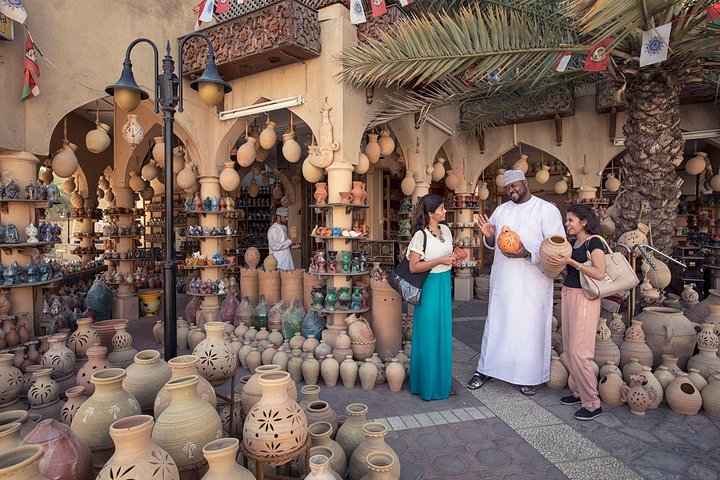
Day three is for Nizwa. In the souq, the air smells of dates and cardamom while silversmiths hammer khanjars to a rhythm older than traffic. Nizwa Fort—the 17th-century stronghold of the Ya’rubi dynasty—rises with thick walls and a commanding tower. Climb for a final panorama: palms, mountains, and the sweep of the interior.
This private, three-day loop packs varied terrain—coast, canyon, dunes, and high plateau—without rushing. Expect drives of 1–2 hours between most sites, with one longer mountain transfer. Hydration matters year-round. Modest clothing keeps you sun-safe and culture-ready. Water shoes pay their way in slick wadis; a light layer is smart for cool desert nights. Peak season runs October through April for mild temps and clearer skies. Your guide handles the navigation and permits (including 4WD access for Jebel Akhdar), leaving you free to follow Oman’s shifting textures as they pull you forward.
Things to know before you go
Dress cool, cover smart
Lightweight long sleeves and knee-length shorts or pants keep you sun-safe and appropriate for towns and forts.
Bring water shoes for wadis
The last stretch of Wadi Shab and parts of Wadi Bani Khalid require wading; grippy water shoes make it easy.
Hydrate like it matters
Carry 2–3 liters per person per day plus electrolytes, especially from April–October.
Pack a light layer for the desert
Wahiba Sands cools quickly after sunset— a thin fleece or windbreaker keeps the chill off.
Your questions, answered.
When is the best time to do this tour?
October to April offers milder temperatures, clearer skies, and more comfortable hiking and desert evenings.
Do I need to be a strong swimmer?
Swimming is optional. Wadi Shab’s most scenic pools require short swims; a float or life vest can be provided on request.
What footwear works best?
Wear breathable hiking shoes or sturdy trainers for trails, plus water shoes for wadis; avoid flip-flops for hiking sections.
Is 4WD required for Jebel Akhdar?
Yes—access beyond the checkpoint requires a 4WD. Your guide/driver manages all permits and driving.
What kind of accommodations are included?
Expect one night in a desert camp in Wahiba Sands and one night at a mountain resort on the Saiq Plateau (or similar).
Is hotel pickup in Muscat included?
Yes, private pickup and drop-off in Muscat are typically included; confirm your location during booking.