THE ADVENTURE COLLECTIVE FIELD NOTES
A closer look at the journey.
Morning sun lifts over the Gulf of Oman as the road peels east from Muscat, the mountains parting like theater curtains. In a 4WD built for the job, the route threads the coast to Bimmah Sinkhole’s limestone bowl—a shock of turquoise that tempts a quick swim before the day stretches on. Farther south, Wadi Shab calls. The canyon narrows, palm fronds flicker in the breeze, and the water dares you forward. Expect roughly 6 km round-trip, with boulder hopping and knee-deep wades that end in a swim through a slit of rock to a hidden waterfall cave where the current nudges you to keep exploring.
Night folds over Ras Al Jinz, and the beach hushes to a soft rush of surf. Green turtles heave from the sea, purposeful and ancient. Rangers keep a low-lit vigil; photography is tightly controlled, flash strictly banned. The desert arrives next—Sharqiya (Wahiba) Sands—where the wind writes new lines on tall dunes by the minute. The guide drops into the sand with tire pressure lowered, cresting ridges for sunset. After dark, the Milky Way stitches across the sky and the dune backs hold the day’s heat like coals.
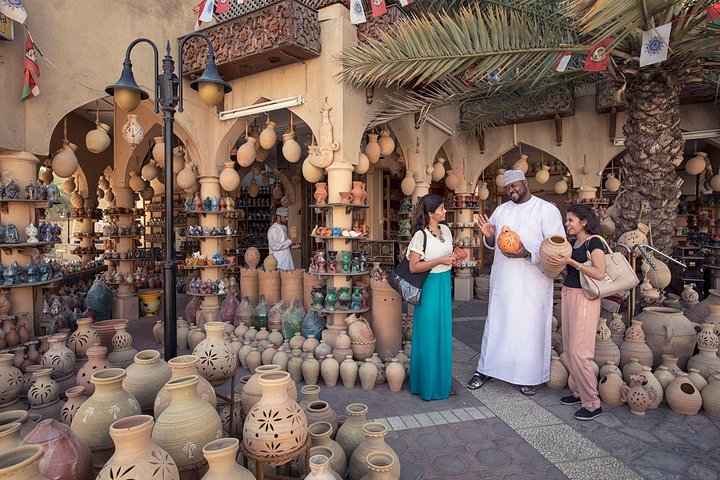
Coastal Sur reveals its dhow-building heritage by daylight: ribs of teak, hand tools, and a craft that still breathes. Up in the mountains, Nizwa’s 17th‑century fort stands stout over a souq dense with dates, spices, halwa, and silver. A short drive west brings the falaj of Birkat Al Mouz—a 2,000‑year‑old gravity-fed canal system still threading water through gardens. Then comes altitude. Jabal Akhdar rises to around 2,800 m; terraces cling to slopes and Wadi Bani Habib’s abandoned hamlet stares across a deep cleft. Cool air sharpens the senses and slows the pulse.
This 4‑day circuit moves at a steady, engaging pace. Most days mix light hiking or swimming with scenic drives; the longest walk is Wadi Shab. Wadi Bani Khalid’s pools are easier—smooth stone, short approaches, irresistible water. A 4WD is mandatory for Jabal Akhdar’s checkpoint; your local guide handles the climb.
Practical notes: Carry 2–3 liters of water per person on hiking days, plus electrolytes in summer. Closed‑toe water shoes give you traction on slick limestone. Modest dress (shoulders and knees covered) is appreciated in souqs and villages. Turtle viewing peaks May–September, though sightings occur year‑round; always follow ranger instructions. Expect daytime highs of 28–40°C at sea level, cooler on the plateau, and notably chilly winter nights in the desert. Distances are manageable—Muscat to Wadi Shab is about 1.5–2 hours; Nizwa to Jabal Akhdar, roughly 1 hour to the checkpoint. The terrain keeps the trip honest, the culture keeps it grounded, and the Omani landscape does the rest—ever-moving, always inviting you onward.
Things to know before you go
Plan for wet and dry feet
Wadi Shab and Wadi Bani Khalid involve wading and swimming—closed‑toe water shoes and a small dry bag make the day far more comfortable.
Respect turtle‑watching rules
At Ras Al Jinz, no flash, lights, or loud noise—stick with the ranger and keep a respectful distance to avoid stressing nesting turtles.
Beat the desert heat
Start hikes early, carry 2–3 liters of water per person, and add electrolytes in summer when temps push 40°C at sea level.
Know the 4WD checkpoint
Access to Jabal Akhdar requires a 4WD by law—your guide handles driving, but carry a light layer for cooler high‑altitude temps.
Your questions, answered.
How strenuous is the hiking on this trip?
Most walks are easy to moderate. Wadi Shab is the toughest at roughly 6 km round‑trip with short scrambles and a swim to reach the cave. Wadi Bani Khalid involves shorter walks on smooth rock.
Do I need to swim at Wadi Shab?
Swimming is optional but required to access the final waterfall cave. Non‑swimmers can stop at the last pool or use a float; there are no lifeguards on duty.
When is the best time to see turtles at Ras Al Jinz?
Green turtles nest year‑round with peak activity from May to September. Guided night walks run daily, but photography rules are strict—no flash or bright lights.
Is a 4WD required for Jabal Akhdar?
Yes. The checkpoint only allows 4WD vehicles due to steep grades. Your guide drives the ascent and descent.
What are the accommodations like?
Expect comfortable 3–4 star properties, including a desert camp, resort-style rooms on the coast, and a mountain hotel on Jabal Akhdar—private rooms with modern amenities.
Can dietary needs be accommodated?
Yes. Breakfasts and dinners are included, and vegetarian options are common. Inform your operator in advance for vegan or allergy‑friendly meals.