THE ADVENTURE COLLECTIVE FIELD NOTES
A closer look at the journey.
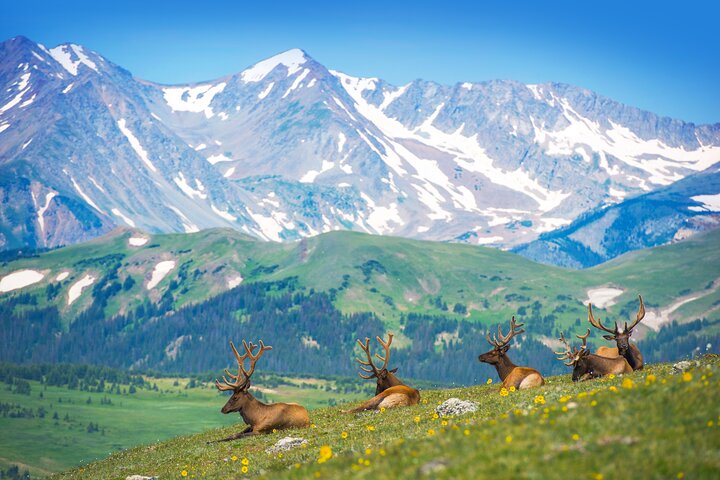
You step out of the vehicle at 11,700 feet and the air feels thin and honest; the wind nudges you toward the rim of a glacial cirque while distant peaks hold their lines against the sky. The Top of the World Tour begins in Estes Park, threads past the historic Stanley Hotel, and climbs old Fall River Road or Trail Ridge Road through forests, subalpine meadows, and high alpine tundra.
Geology here reads like an open book: uplifted Precambrian rock, rounded glacial bowls, and moraine-sculpted valleys. Human history layers on top — Native Ute and Arapaho use, early mountain tourism in Estes Park, and the National Park Service’s century-long stewardship. Guides point out energy vortex sites and local lore, then scan for bighorn sheep, elk, and the American dipper by waterfalls.
Expect frequent stops: a short stroll to a waterfall, photo breaks at overlooks, and a 20–30 minute stop at the Alpine Visitor Center where exhibits and gift shop give context to the high country. Wildlife sightings are common; binoculars reward patience. The route traverses one-way Old Fall River Road (seasonal, typically July–Oct) and the paved Trail Ridge Road, the highest continuous paved road in the U.S.
Practical notes: bring layers for sudden wind and sun, hydrate before the ascent, and allow time to acclimatize to altitude — even short walks can feel harder above 10,000 feet. Cameras with a zoom or binoculars improve wildlife viewing. Tours run roughly 3–4 hours and are accessible to most fitness levels since most travel is by vehicle, but weather‑dependent closures are possible — check conditions and bring a park pass or confirm it’s provided.
Things to know before you go
Dress in layers
Temperatures and wind change quickly above 10,000 ft; include a windproof outer layer and insulating midlayer.
Hydrate before the climb
Altitude can cause dehydration and shortness of breath—drink water before and during the tour.
Bring optics
A compact pair of binoculars or a zoom lens will improve wildlife and distant-peak viewing.
Protect against sun and wind
High-elevation sun is intense—use sunscreen, sunglasses, and a hat even on cool days.
Your questions, answered.
Is the Alpine Visitor Center open year-round?
The Alpine Visitor Center is seasonal; it’s usually open during the summer months when Trail Ridge Road is passable—check NPS for current seasonal dates.
Will I see wildlife on the tour?
Yes—guides commonly spot elk, mule deer, bighorn sheep, and a variety of birds, but sightings aren’t guaranteed and depend on season and timing.
Can I choose Old Fall River Road or Trail Ridge Road?
Old Fall River Road is a one-way dirt route typically open July–October; which route is used depends on season and road conditions and is at the guide’s discretion.
Do I need a National Park Pass?
A park pass is required for entry; the tour notes a National Park Pass is included or required—confirm when booking if it’s provided.