THE ADVENTURE COLLECTIVE FIELD NOTES
A closer look at the journey.
Dawn moves across Muscat’s corniche as the Arabian Sea blinks awake, and the city’s whitewashed facades begin to glow. This five-day circuit launches from the capital and traces Oman’s greatest hits—coastal wadis that dare you to swim farther, dunes that roll like a restless ocean, and mountain fortresses that keep watch over date-palm oases. It’s a compact loop with big terrain, long horizons, and a steady rhythm of swim, drive, walk, and wander.
The coastal road points southeast toward Quriyat, then the karst mouth of Bimmah Sinkhole, where limestone cliffs drop into turquoise. A few bends later, Wadi Shab steals the show: a 3 km path threads palm groves and boulder-hop crossings to jade pools. Strong swimmers can push through the final narrows to a hidden chamber; water shoes help on slick rock, and dry bags earn their keep. Continuing to Sur, the dhow-building capital, the route edges into Ras Al Jinz for a ranger-led night walk—green turtles haul ashore with tidal determination during peak nesting (May–September), though sightings can occur year-round.
Day two trades surf for sand. Wadi Bani Khalid’s spring-fed pools are clear, cool, and inviting—bring modest swimwear and expect uneven limestone underfoot. Then the vehicle noses into the Sharqiya Sands (Wahiba), a 12,500-square-kilometer sand sea where apricot ridges rise 100–150 meters. A 4WD guide reads the dunes; you ride the momentum. Sunset paints the crests, and the desert night unfurls sharp stars.
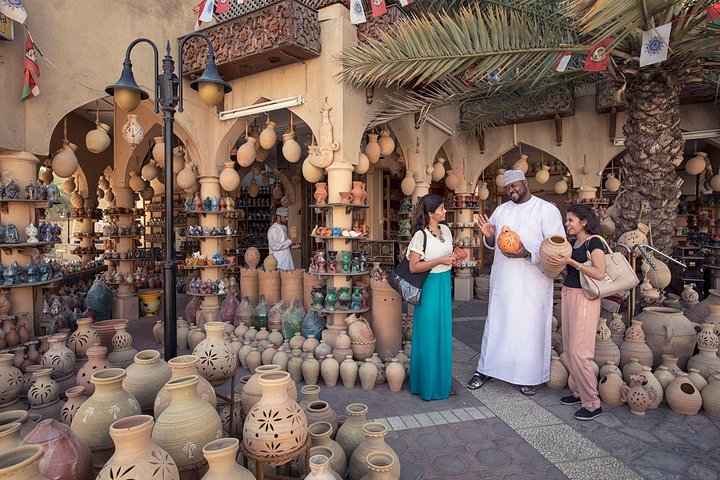
History arrives on day three in Nizwa, once a hub of trade and scholarship. The cylindrical tower of Nizwa Fort still anchors the skyline; the souq hums with silverwork and the Friday livestock auction before sunrise. Nearby Jabrin Castle reveals painted ceilings and carved doors that speak to the Ya’aruba era’s artistry.
By day four, the Al Hajar Mountains pull you upslope. The route steps through Misfat Al Abriyeen’s stone lanes and falaj channels, then climbs to Jebel Shams—Oman’s highest massif near 3,009 meters. The rim views into Wadi Ghul, the so-called “Grand Canyon of Arabia,” are wide and dry, with stratified cliffs that tell a geologic story millions of years long.
The finale drops through Wadi Bani Awf, a rugged 4WD track stitched with steep grades, narrow bends, and wadis that can surge after rain. It’s a muscular road with big payoff: terraced villages like Bilad Sayt and a last gasp of hot springs and fort at Nakhl before Muscat reappears.
Expect full but manageable days: coastal drives of 2.5–3 hours, short canyon hikes with swims, sandy strolls on dune flanks, and cool mountain evenings. Hydration, sun sense, and respectful dress go a long way here. Oman answers with clarity—clear water, clear light, clear pathways through a landscape built for movement.
Things to know before you go
Hydrate like it’s summer—year-round
Carry 2–3 liters of water per person daily plus electrolytes; coastal and desert heat can push well above 35°C even in shoulder seasons.
Footwear that crosses worlds
Wear lightweight hikers or trail shoes with grip for wadis and rocky paths; add packable water shoes for Wadi Shab and Wadi Bani Khalid.
Respect turtle protocols
At Ras Al Jinz, follow rangers, use no flash, and keep distance; nesting peaks May–September but sightings aren’t guaranteed.
Dress smart for sun and culture
Choose light, breathable long sleeves and below-knee bottoms; it protects from sun and aligns with local norms in towns and souqs.
Your questions, answered.
How strenuous is this itinerary?
It’s moderate: expect short hikes (up to ~6 km round-trip in Wadi Shab), swims, some stair climbing in forts, and bumpy 4WD tracks. The guide handles driving.
When is the best time to travel?
October to April offers cooler temperatures for hiking and desert nights. Turtle nesting peaks May–September; expect high heat in summer.
Can children join?
Yes for most families, but kids should be comfortable in heat and around water. Life vests for young swimmers are recommended in wadis.
Do I need a 4x4 or special driving skills?
No—this is a guided tour with an experienced driver. Wadi Bani Awf and desert sections require a professional 4WD operator.
What should I wear for visiting towns and forts?
Opt for modest, breathable clothing: shoulders and knees covered. Pack a light scarf or shawl for extra coverage and sun protection.
Is turtle viewing guaranteed?
Sightings are not guaranteed. Ras Al Jinz operates ranger-led walks with strict protocols to protect nesting turtles; rules vary nightly.