THE ADVENTURE COLLECTIVE FIELD NOTES
A closer look at the journey.
Morning light pours over a stone fort and the narrow lanes of Nizwa as a 4WD slips out of Muscat toward the Hajar range. The air changes from coastal warmth to crisp plateau wind; spice scents from the souq mix with dust and citrus from terraced orchards above.
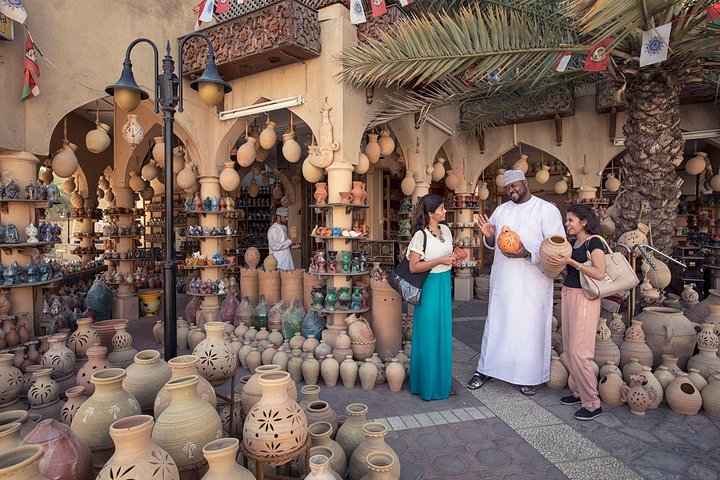
Nizwa was Oman’s political heart under the Al Yaruba dynasty; its fort (1649) and older castle offer a compact lesson in military architecture and local craft. The souq still hums with vendors selling halwa, silver khanjars, spices and seasonal dates—on Fridays a traditional livestock market animates the streets.
Higher up, Jabal Akhdar’s Saiq Plateau defies Oman’s arid image: stone terraces and irrigated wadis grow pomegranates, apricots, and roses fed by ancient falaj channels. Wadi Bani Habib’s abandoned stone village gives a sense of human endurance against granite and wind. Birkat Al-Moz (Birkat al-Mawz) showcases a dense falaj network listed by UNESCO; walking the old channels reveals how water shaped settlement patterns here.
Practicalities: expect a full 9–10 hour day with moderate walking on uneven village paths and paved lookout points. Temperatures can drop quickly above 1,500–2,000 m—layers help. Bring cash for souq purchases, and allow extra time for photo stops on steep, winding roads. The route is largely accessible by paved and maintained mountain roads, but the real rewards are slow: market rhythms, rooftop views, orchard scents and the engineered geometry of falaj irrigation.
Things to know before you go
Dress respectfully and in layers
Light, breathable clothing that covers shoulders and knees is recommended for souqs and villages; bring a warm layer for higher elevations.
Carry cash for markets
Many souq vendors accept only OMR cash—small notes for purchases and haggling make transactions smoother.
Hydrate and sun-protect
Bring at least 1–2 liters of water per person and use sunscreen and a hat; the sun intensifies on exposed terraces.
Be prepared for narrow mountain roads
While driven in air-conditioned 4WD, expect winding sections—choose a tour operator experienced with the Hajar routes.
Your questions, answered.
How long is the drive from Muscat to Nizwa?
Expect about 1.5–2 hours each way depending on traffic and exact pickup location; mountain drives to Jabal Akhdar add additional time due to winding roads.
Are entrance fees to Nizwa Fort included?
This tour’s description notes visits but often does not include admission—confirm with the operator at booking to know if fort entry is covered.
Is the tour suitable for young children or infants?
The operator provides infant seats and rates the trip as physically easy, but long drives and mountain roads may be tiring for very young children.
Can I visit the falaj channels in Birkat Al-Moz independently?
Yes, the village and falaj system are open to the public, but guided context helps interpret the irrigation engineering and local history.