THE ADVENTURE COLLECTIVE FIELD NOTES
A closer look at the journey.
Dawn finds Muscat rubbing its eyes as the Al Hajar Mountains lift out of the haze. The road noses inland, climbing toward limestone ramparts and ophiolite cliffs that wear their deep-ocean past in bands of green and black. Date palms gather at village edges. At Nakhal, a 1,500-year-old fortress still watches the wadi like it has something to prove. Stone corridors whisper of escape routes and sieges; from the ramparts, the plantations glow a hard green against rock.
The mountains pull you higher. Snake Canyon pinches tight, the wadi daring you to trace its bends. Balad Sayt spreads its terraces like a chessboard beneath granite walls. Up on Jabal Shams, the Grand Canyon of Oman opens without apology. The rim sits near 2,000 meters; the air thins and the landscape exhales. Strata stack cleanly across the abyss; shadows move first, then rock. It’s a place that edits your thoughts.
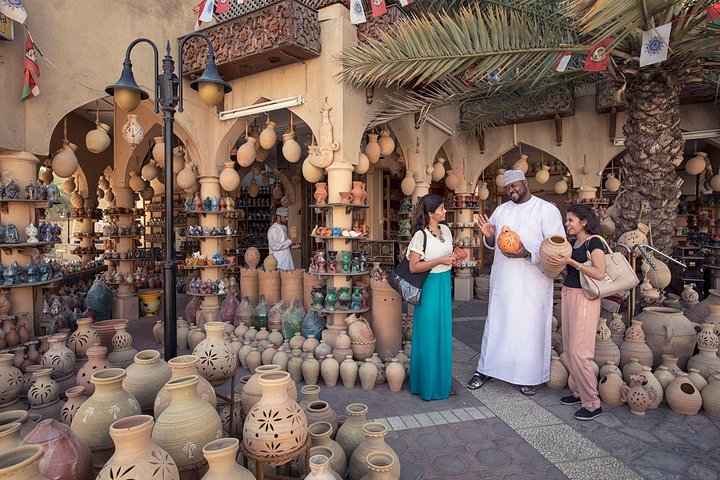
Down in Nizwa, the rhythm changes. In the souq, frankincense curls, silver clinks, and vendors bargain without theatrics. The fort’s thick walls—Yaruba-era muscle from the 1600s—still telegraph strength. Birkat Al Moz follows, its UNESCO-listed falaj threading water to groves the way veins feed a hand.
By afternoon, the desert takes over. Wahiba Sands shifts and sighs, each dune reforming with the breeze. A 4x4 climbs, drops, and climbs again; the horizon feels like a promise you’ll never quite catch. Sun slides off the sand in burnt gold. Stars arrive with intent, crowding the sky while the desert cools fast.
Water returns the next morning at Wadi Bani Khalid. The pools are glassy and deep, pulling heat from your skin in seconds. Later, Sur’s dhow yards remind you this coast has always looked outward—wooden hulls lean into the sun as craftsmen coax lines from timber. Night belongs to Ras Al Jinz, where green turtles shoulder ashore. You move under red light; flash and noise are out. Sand sifts, eggs drop, and the sea keeps breathing.
On the final day, Wadi Shab calls. A 45-minute canyon walk—roughly 3–4 km round trip—leads to a chain of turquoise pools, the warm current nudging you into a narrow cleft where sunlight turns water electric. Fins Beach flashes white, then the Bimmah Sinkhole reveals a limestone bowl 50 by 70 meters across, a private sea cupped by rock. By afternoon, the coast unwinds back toward Muscat. Four days, and Oman has shown you its edges and its center: stone, sand, and water, each with a voice of its own.
Things to know before you go
Respect turtle protocols
At Ras Al Jinz, wear dark clothing, follow your guide, use red light only, and never use flash or touch turtles or hatchlings.
Footwear for wadis
Bring closed-toe hiking shoes plus grippy water shoes for Wadi Shab and Wadi Bani Khalid; slick rock and pebbles are common.
Beat the heat
Start hikes early, hydrate constantly, and add electrolytes—summer temps can soar inland and reflect off canyon walls.
Cash for souq
Small vendors in Nizwa’s souq prefer cash (OMR). Keep small bills handy for snacks, coffee, and souvenirs.
Your questions, answered.
How much hiking is involved?
Expect short walks at forts and viewpoints plus a 45-minute hike in Wadi Shab (roughly 3–4 km round trip) and casual wandering in wadis and villages.
Do I need to swim at Wadi Shab?
Swimming is optional. You can enjoy the initial pools without swimming, but accessing the crevice cave requires a confident swim through deep water.
When is the best time to go?
October to April offers cooler temperatures and clearer skies for mountain and desert days; summer brings extreme heat but peak turtle activity on the coast.
What should I wear at Ras Al Jinz?
Dark, modest clothing and closed-toe shoes. No flash photography; follow guides and use red light only to protect turtles.
Is this tour family-friendly?
Yes for active families. Children should be supervised near cliffs and water; turtle viewing is at night and may run late.
Are meals included?
Breakfasts are included throughout with two buffet dinners (desert camp and Ras Al Hadd resort). Lunches are typically on your own en route.