THE ADVENTURE COLLECTIVE FIELD NOTES
A closer look at the journey.
The morning air on the Hajar range is a clean, dry knife; the road peels away from Muscat and the palm-fringed plain becomes terraces, dry-stone fields and crag. By midmorning the convoy climbs into a stony landscape where wind has carved ridges and the canyon yawns like a patience-testing animal daring you to look deeper.
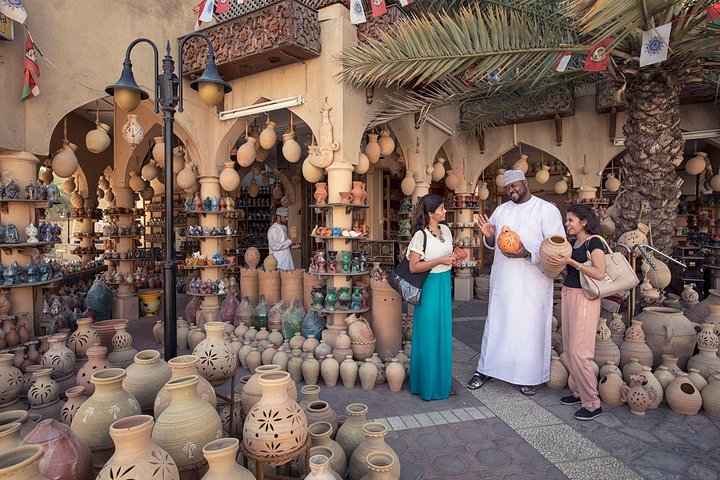
Nizwa’s 17th-century fort opens a window into Oman’s tribal past — its circular tower, pierced with musket slots, once guarded trade routes and date wealth. The souq below still hums with merchants selling khanjars, silver and woven goods, a direct thread to the city’s role as a cultural hub.
Geologically, Jebel Shams is the highest point in Oman and the Hajar Mountains are composed of uplifted sedimentary rock and limestone, cut by deep wadis like Wadi Ghul. The so-called "Grand Canyon of Oman" is a dramatic example of fluvial erosion meeting uplift; viewpoints give layered panoramas that shift color through the day.
Culturally, villages like Bahla and Wadi Ghul preserve vernacular architecture and small-scale farming — terraced plots and falaj irrigation systems still in use. Expect short walks to viewpoints rather than long technical hikes; cool mountain breezes can arrive suddenly.
Practical guidance: start early, carry 2–3 liters of water, wear sturdy footwear for loose rock, and layer up for wind and shade. Photography windows are mid-morning and late afternoon. Respect local customs at the souq — ask before photographing people — and stay on marked tracks around cliffs for safety.
Things to know before you go
Hydrate for the drive
Carry at least 2–3 liters of water per person; mountain air is dry and you'll be outdoors most of the day.
Sun protection
Bring high-SPF sunscreen and a wide-brim hat — shade is limited in the Hajar Mountains.
Sturdy footwear
Wear closed shoes with good grip for loose, rocky viewpoints and short walks.
Respect cliff edges
Viewpoints are dramatic and exposed; keep children close and avoid standing on loose scree.
Your questions, answered.
Where does the tour start and end?
Most operators pick up and return to central Muscat; check your booking for the exact pickup point and time.
How much walking is involved?
Expect short, non-technical walks to viewpoint areas and around the Nizwa souq and fort; no long hikes are required.
Is lunch included?
Yes, a lunch is included as part of the full-day excursion — often a local or hotel-style meal in a restaurant en route or in Nizwa.
What about weather cancellations?
Tours may be canceled for severe weather; heat is common in summer while winter mornings can be chilly — operators typically confirm the day before.