THE ADVENTURE COLLECTIVE FIELD NOTES
A closer look at the journey.
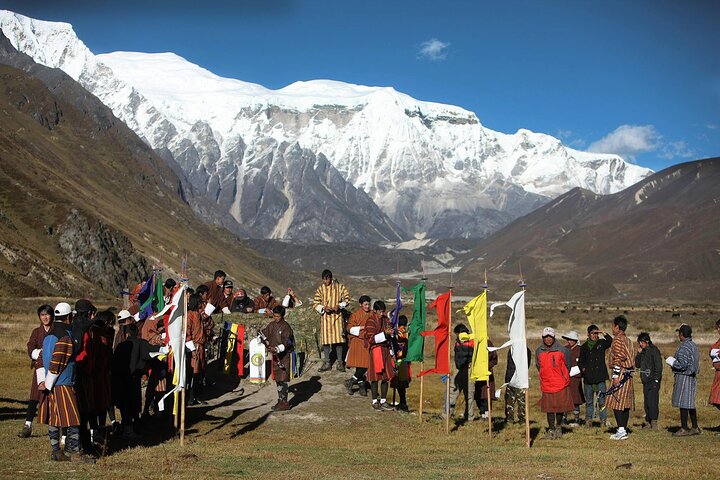
You step out of Paro valley into thin, clear air and the ridge of the Himalaya seems to lean closer, as if watching your progress. Daylight slides over white stupas at Dochu La, Buddhist flags snap like bright punctuation, and the path to Taktsang (Tiger’s Nest) climbs through fir-scented forest until the cliff-face monastery appears, clinging 800 metres above the valley floor.
Bhutan folds history and geology together: fortress-like dzongs built at river confluences, Himalayan glaciation carving U-shaped valleys like Phobjikha, and a constitution that mandates 60% forest cover—part of a national commitment to Gross National Happiness rather than GDP alone. You'll pass 17th-century temples, 1649 watchtowers converted into museums, and terraced farms where archery remains the national sport.
Expect steady, accessible hikes—Tango and Khamsum are mostly paved or well-cleared—and one demanding climb to Taktsang that takes 4–5 hours round trip for many visitors. Altitude swings are real: Thimphu (~2,334 m), Dochu La (~3,150 m), Phobjikha (~3,000 m) and Punakha (~1,200 m) mean layered clothing and a measured pace matter more than speed.
Practical notes: visas are processed in advance (e-Visa issued in ~4–5 business days), passports need six months’ validity, and guided ground transport plus most meals and entry fees are usually included. Bring sturdy footwear, a hydration system, sun protection, and allow time to acclimatize before the higher passes. With respect for local customs and a bit of patience on mountain roads, this seven-day loop rewards with monasteries, wildlife (especially black-necked cranes in winter), and a clear sense of a country managing modern tourism on its own terms.
Things to know before you go
Acclimatize before high passes
Spend the first day in Thimphu to adjust—Dochu La climbs to 3,150 m and sudden elevation changes can fatigue even fit travelers.
Pack for variable weather
Bring a lightweight waterproof shell and warm mid-layer; temperatures drop quickly above 3,000 m and sun can be intense at lower valleys.
Respect monastery etiquette
Wear modest clothing, remove hats and shoes where required, and ask before photographing monks or rituals.
Consider the horse option sparingly
Horses are available to the Taktsang cafeteria midpoint, but the upper climb is steep and horses are not recommended for descent—use them only if you have limited mobility.
Your questions, answered.
Do I need a visa to visit Bhutan for this tour?
Yes—your e-Visa is processed by the tour operator after you submit passport copies; approval typically takes about 4–5 business days.
How strenuous is the Tiger’s Nest hike?
The round-trip takes about 4–5 hours for most people with steep sections and stairways; horses are available to the mid-cafeteria but the final ascent is on foot.
Are meals and transport included?
Most multi-day packages include ground transportation, most meals, accommodation in twin-share hotels or homestays, entrances and an English-speaking guide—confirm inclusions with your operator.
When is the best time to see black-necked cranes?
Black-necked cranes winter in Phobjikha from November to March, with a festival each November celebrating their arrival.