THE ADVENTURE COLLECTIVE FIELD NOTES
A closer look at the journey.
You wake before dawn in Paro, the valley at your feet a slow wash of grey, prayer flags stilled by the cold. A short drive climbs through fir and pine; the trailhead at Sangchoekhor looks out over terraced rice and the ring of Bhutan’s eastern ranges. The hike to Bumdrak pushes steadily upward, following age-old pilgrim tracks, then opens into a meadow rimmed with chortens where a simple camp waits beneath the temple.
This trip threads four western districts of Bhutan—Paro, Thimphu, Punakha and Phobjikha—blending valley monasteries, dzongs and a gentle two-day trek to Bumdrak (3,860m). Geologically the landscape is young Himalaya: steep river-cut valleys, glacial cirques in higher basins, and ridgelines formed by recent uplift. Culturally you move through centuries of Drukpa Kagyu tradition: Taktsang’s cliffside caves, Punakha Dzong’s river confluence and village weaving practices reveal how religion, agriculture and craft shape daily life.
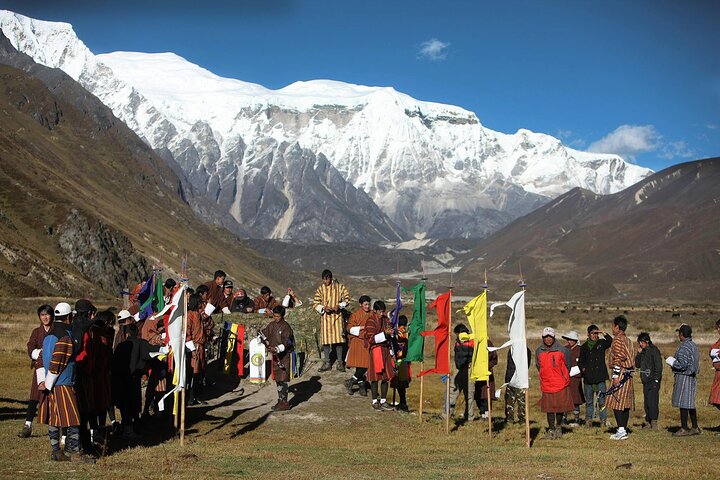
Expect forested climbs with rhododendron and fir, panoramic high-mountain meadows for camping and a return that includes the iconic Taktsang (Tiger’s Nest) descent. Guides handle permits, meals and transport; camping at Bumdrak is full-service but at altitude. Practical edge: pace your ascent, carry layers for sharp temperature swings, and allow time for short acclimatization rests. Photographers will love sunrise from the meadow; birders should watch for Himalayan monal and seasonal migrants. This itinerary balances cultural sightseeing with moderate trekking—an accessible Himalayan experience that rewards preparation as much as curiosity.
Things to know before you go
Acclimatize early
Spend the first full day taking it easy in Thimphu or Paro to reduce risk of altitude sickness before the Bumdrak ascent.
Sturdy footwear
Trails include rocky, rooty and sometimes muddy sections—supportive, broken-in hiking boots improve comfort and safety.
Pack layered insulation
Temperatures swing quickly from sunlit meadows to cold mountain nights—bring a warm mid-layer and windproof shell.
Carry cash for remote services
Small villages and teahouses may not accept cards; have local currency for extras like hot-stone baths or snacks.
Your questions, answered.
Do I need a visa to visit Bhutan for this tour?
Yes—tour bookings include e-Visa processing (usually 4–5 business days) after you submit passport copies; the visa is stamped on arrival.
How difficult is the Bumdrak trek at 3,860m?
The trek is classified as easy-to-moderate: hikes of 4–5 hours with steady ascent; altitude can feel challenging, so pacing and hydration are important.
Are meals and camping gear provided?
Yes—this itinerary includes meals, full-service camping at Bumdrak and all ground transport; guides provide dining and tent setup.
When is the best time to go for clear weather and wildflowers?
Spring (March–May) and autumn (Sept–Nov) offer the clearest skies and blooms; April highlights rhododendrons on the Bumdrak route.