THE ADVENTURE COLLECTIVE FIELD NOTES
A closer look at the journey.
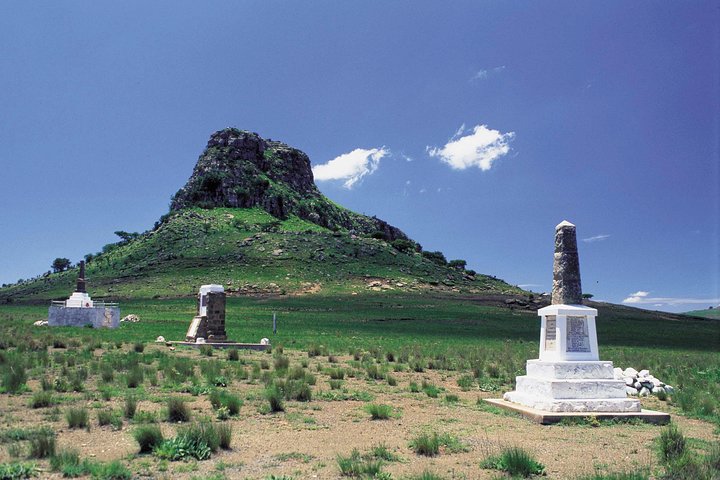
You step out of the vehicle as the Drakensberg's ridge slides into view, a raw line of cliffs cutting the sky. Cold, basalt cliffs rise above tussock grass and indigenous heath, and the trail underfoot crunches with gravel and ancient soil that channels the mountain's long weathering.
The tour threads history and geology: Giants Castle sits on a basalt cap produced by ancient lava flows over older sandstones, carving the steep amphitheatres the escarpment is known for. Local San (Bushman) people left the painted panels here—ochre figures that survive in sheltered caves and speak across millennia about ritual, hunting and movement across these highlands.
Cultural stops create a different pace. Howick Falls drops sharply on the Umgeni River, the spray daring you closer, while the Nelson Mandela Capture Site near Howick frames a modern history moment with its steel sculpture and interpretive centre recalling Mandela's 1962 arrest.
Practical guidance: expect a full-day outing (roughly 10–11 hours). The cave approach is a 40-minute, mostly gentle walk with a 30-minute guided interpretation at the art panels; footwear with grip and a light daypack are sensible. Weather in the Drakensberg shifts fast—sun can turn to wind and drizzle—so layer. Bring at least 1–2 litres of water, sun protection, and a camera with a telephoto for cliffline birds.
The route blends short, accessible walks with vehicle transfers; it rewards anyone curious about rock art, mountain geomorphology and South Africa’s layered histories.
Things to know before you go
Wear grippy, closed-toe shoes
The 40-minute approach to the caves includes uneven rock and gravel; shoes with good traction prevent slips.
Carry 1–2 litres of water
There are no reliable drinking stations on the trail; stay hydrated, especially in summer heat.
Protect camera gear from spray
Howick Falls can produce wind-driven mist—store lenses in dry bags and carry a microfibre cloth.
Respect rock art rules
Do not touch or lean on painted panels; oils from skin damage fragile pigments and archaeology.
Your questions, answered.
How long is the walk to the cave paintings?
The approach is about a 40-minute leisurely walk along a marked trail; the guided interpretation at the rock art lasts roughly 30 minutes.
Is this tour suitable for wheelchair users?
Transport and some surfaces are wheelchair accessible, but the cave approach involves uneven ground and is not suitable for wheelchairs.
Are entrance fees included for the Mandela Capture Site?
The tour includes admission to the Mandela Capture Site museum as listed in the itinerary.
What languages are available for the guide?
The tour is typically in English and may offer German or Polish on request; confirm multilingual needs when booking.