A VAYCAI STORY · THE ADVENTURE COLLECTIVE
Sani Pass: The High Road Between Kingdoms
A high‑altitude corridor of cliffs, cultures and cold pubs—drive, hike and cross into the Mountain Kingdom

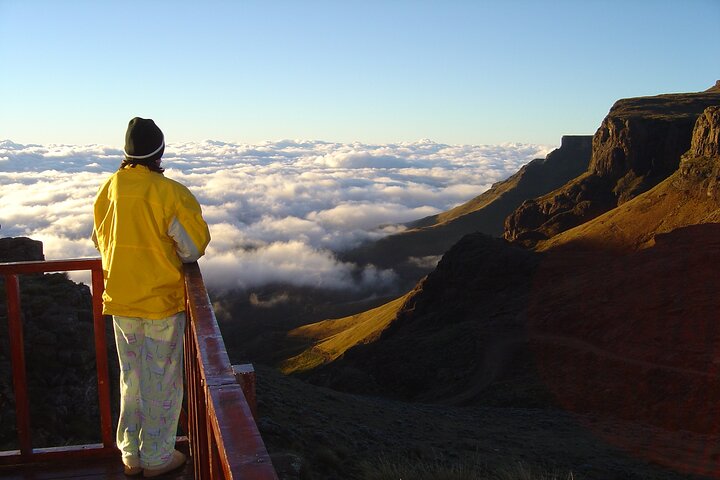
The Land Rover ties and grumbles as it begins the climb, tires biting into a ribbon of gravel that seems to hang off the edge of the world. The air sharpens with altitude, the conversation around me shrinks to the size of the cab and the dash clock, and then the Drakensberg opens up: plunging valleys, folded basalt walls, and—at 3,240 meters—the tinny silhouette of a pub that has become legend for travellers. This is Sani Pass, a high, weathered artery between KwaZulu‑Natal and Lesotho, and on any clear morning the mountain seems to dare you to keep moving.
Sani Pass is not a single experience so much as a chain of them: a wild 4x4 ascent, a passport stamped at a remote mountain border, a descent into Basotho culture, and hikes that reward the short, sharp shock of altitude with sweeping panoramas. The pass rises from roughly 1,544 meters at its South African base to the summit at about 3,240 meters, a climb that has been tamed only partially by tracks and the slow institutionalisation of tourism. Vehicles that pioneered the route—closed Land Rovers—are still the standard here. They rattle and sway not as a nod to nostalgia, but because the landscape refuses to be smoothed out.
The geology reads like a textbook on uplift and erosion. The escarpment creates a hard lip of basalt and dolerite, and glaciers once scratched these slopes, leaving behind steep, incised valleys that funnel wind and weather. Today the high veld alternates between grassland and stony earth, stitched with seasonal wildflowers and grazed by sheep and goats tended by Basotho shepherds. Their stone motebo dwellings sit like punctuation in an otherwise austere sentence.
Culture arrives as subtly as the weather. Cross the border and you’re in Lesotho—the “Kingdom in the Sky”—a nation that’s literally defined by altitude: the entire country lies above 1,000 meters. The Basotho people are present, not packaged. On guided tours you might be invited into a home, offered a lesson on herbal remedies, or watch a ceremonial dance; these are honest exchanges, not staged performances. The “Highest Pub in Africa,” perched near the summit, is both an icon and a reminder that tourism here has edges: the pub limits entry to patrons during busy times, and the entire area exists through a balance of visitor income and community stewardship.
For hikers, Sani Pass is a gateway. The Hodgson’s Peaks route—offered as an add‑on on full‑day itineraries—pushes beyond the pass and rewards a relatively compact effort: roughly 6 km each way with about 400 meters of climbing from the lodge, and an overall altitude gain from Sani Lodge cited as up to 1,700 meters depending on your starting point. At the summit (around 3,256 meters in some accounts) you get a 360‑degree sweep that frames the Maloti Mountains and the serrated spine of the Drakensberg.
Practicalities are simple but non‑negotiable. Pack your passport; you may need a visa depending on nationality. Book lunch at the Sani Top Inn if that’s important—space is limited, and most operators require reservations for the pub. Dress in layers: mountain weather can be benevolent and brutal in the span of an hour. If you plan to hike, a good pair of boots, a windproof shell, and an appreciation for altitude are required. Guides are experienced and add immense value—both for safety on tricky tracks and for context in Basotho villages.
Why come? Sani Pass condenses the elements of a great mountain day into a single route: raw driving, high alpine vistas, cultural contact, and short but satisfying hikes. It’s as much an anthropology lesson as it is a geological tour. You can keep it easy—join a day tour from Durban and return the same night—or extend into overnight stays in Mokhotlong or at the top, where evenings feel more elemental and the sky is closer.
For photographers and naturalists, the pass is a study in contrasts. Raptors wheel on thermals; the odd klipspringer marks a ledge; spring and early summer produce carpets of wildflowers. For anyone interested in sustainable travel, many operators run community‑focused programs that channel revenues into the Sani Top Basotho community and have even won recognition for poverty‑reduction efforts.
The climb itself keeps you honest. There are no handrails or big visitor centers that smooth the experience—just high terrain and the low hum of human industry. If you go, give yourself time to slow down. Sit in a village courtyard, sip tea wrapped in a Basotho blanket, and watch how the clouds climb the buttresses of the Drakensberg. That’s when Sani Pass stops being only a place to cross and becomes a place that insists you pay attention.
Getting there is a twofold act: logistics, then presence. Choose a reputable operator, check visa rules, bring the right kit, and be ready for a day that mixes jolting 4x4 sections with very human encounters. When the pass is good, it’s one of southern Africa’s clearest, most immediate mountain experiences—short on fuss, long on perspective.
A few things worth knowing.
Carry your passport and check visa rules
Border control sits at the top of the pass—carry a valid passport and confirm whether a visa is required well before departure.
Prepare for altitude shifts
Increase fluid intake, go slow on hikes, and bring warm layers—symptoms of mild altitude discomfort are common above 2,500 m.
Footwear matters
Wear sturdy, grippy hiking boots for trails and uneven tracks in the pass; trainers are often insufficient on steep, rocky terrain.
Book the Highest Pub in advance
The Sani Top Inn limits entry to dining patrons—reserve your lunch early if that stop is a priority.
The local thread.
Sani Pass evolved from an ancient trading and shepherding route into a motorable pass; it remains a cultural link between South Africa and the Kingdom of Lesotho.
A closer look
- Hodgson’s Peaks summit viewpoint—short hike with panoramic vistas beyond typical tour stops
- Visits to motebo village homesteads for authentic home‑stays and cultural exchange
Wildlife you might see
- Verreaux’s (black) eagle
- Mountain reedbuck
Many operators include community contributions to the Sani Top Basotho community; stick to marked paths, avoid littering, and use licensed guides to support local stewardship.
A different story in every season.
spring
Spring (Sept–Nov) brings wildflower displays and stable days ideal for hikes, with occasional rainy spells—pack a light waterproof.
Good for
- wildflowers
- birdwatching
- moderate hiking
Plan around
- unpredictable showers
- muddy tracks after rain
summer
Summer (Dec–Feb) has warm, sometimes wet days; storms can close sections temporarily—aim for morning drives and hikes.
Good for
- lush landscapes
- longer daylight
- cultural visits
Plan around
- heavy afternoon storms
- fog on the pass
fall
Autumn (Mar–May) offers clear air and dramatic light—temperatures drop quickly after sunset so layer accordingly.
Good for
- crisp skies
- photography
- cooler hiking conditions
Plan around
- sudden chill at altitude
- shorter days
winter
Winter (Jun–Aug) can bring snow and icy roads; only experienced operators run trips—expect very cold conditions at the summit.
Good for
- snowy landscapes
- quiet trails
- dramatic vistas
Plan around
- snow and ice on tracks
- restricted vehicle access
Pack a little wisdom.
- Sturdy hiking bootsEssential
Support and traction on rocky, uneven alpine trails and in the pass.
- Insulated windproof jacketEssential
Protects against sudden wind chill and cold at high altitude.
- Daypack with water bladderEssential
Hands‑free hydration and space for layers, snacks, and camera gear.
- Sun protection (sunglasses, high SPF sunscreen)Essential
High-altitude UV is intense—protect skin and eyes on exposed ridgelines.
Through your own lens.
Shoot the pass in early morning or late afternoon for warm side light; use a wide-angle lens for ridgelines and a telephoto for raptors or village life; a polarizer deepens skies and reduces glare off wet stone—stabilize with a monopod on windy ridges.
Before you head out.
What to pack
Passport or ID (border control); sturdy hiking boots (terrain); layered warm jacket (altitude chill); water and snacks (limited services)
Did you know?
Lesotho is the only country in the world that lies entirely above 1,000 meters (3,281 feet) in elevation.
Quick travel tips
Reserve lunch at the Sani Top Inn in advance; travel with a licensed 4x4 operator for safety; check weather/road conditions day-of; carry cash for small purchases in villages.
Local flavor
Basotho culture threads through the experience—look for handwoven blankets, stone motebo homes, and locally made crafts; enjoy simple mountain meals and communal tea when visiting villages.
Getting oriented
Departures from Underberg or Durban; full‑day tours (6–10 hrs); passport required; steep 4x4 tracks; reserve Sani Top Inn seating; varied weather—layer up.
Travel with care
Choose operators that contribute to local Basotho community programs, follow Leave No Trace principles, and avoid single‑use plastics while visiting villages and upland ecosystems.
The questions before the journey.
Do I need a passport to visit Sani Pass?
Yes—Sani Pass crosses an international border into Lesotho; carry a valid passport and check visa requirements for your nationality before travel.
Is the Highest Pub in Africa always open to visitors?
The Sani Top Inn limits entry during peak times to patrons who have reserved lunch—book through your tour operator to guarantee access.
Can I drive my own 4x4 up the pass?
Private vehicles are technically possible but challenging; many operators require experienced drivers and proper vehicle preparation—joining a guided tour in a proven 4x4 is the safer option.
What wildlife might I see?
Expect raptors like Verreaux’s (black) eagle and other highland birds; small ungulates and domestic flocks tended by Basotho shepherds are common.
Is the pass open year‑round?
Generally yes, but heavy snow or storms in winter can close the road—check with local operators for daily conditions.
How much time should I allow for a day trip from Durban or Underberg?
Plan for a full day (6–10 hours) including travel to the pass, time at the summit, cultural stops, and return—Underberg departures are shorter than Durban.
Original editorial content from The Adventure Collective; some writing uses automated assistance. Conditions and operator details can change. Confirm practical information before your visit. Suggest a correction.
FROM THE PAGE TO THE PLACE
Make a little room for adventure.
Published trip guides linked to this story. Check each itinerary and current availability with Viator.

Cape Town, South Africa
12-Day South Africa Adventure: Kruger Safaris, Garden Route & Cape Town Highlights


Cape Town, South Africa
15-Day South Africa Adventure: From Johannesburg Safaris to Cape Town Coastlines

Underberg, South Africa
Sani Pass 4x4 Day Tour from Durban: Cross into Lesotho and Visit the Highest Pub

Johannesburg, South Africa
15-Day Johannesburg to Cape Town: Garden Route, Kruger Safari & Coastal Adventure

Johannesburg, South Africa
15-Day South Africa Safari: Johannesburg to Cape Town via Kruger & Garden Route

Johannesburg, South Africa
Johannesburg to Cape Town 15-Day Private Safari and Garden Route Adventure

Johannesburg, South Africa
Johannesburg to Cape Town: 15-Day Private South Africa Adventure & Safari
Looking for more options? Explore Sani Pass on Viator ↗
More ways to explore Underberg
Other experiences in the destination; check the itinerary for the places visited.

Underberg, South Africa
Sani Pass Day Trip from Durban: 4x4 Drakensberg Adventure to Lesotho’s Highest Pub

Underberg, South Africa
Private Sani Pass 4x4 Day Tour from Durban to Lesotho’s Highest Pub
Underberg, South Africa
Sani Pass Day Tour from Durban: Drive the Drakensberg to Lesotho’s Highest Pub

Underberg, South Africa
Half-Day Drakensberg Hike from Durban: San Art, Waterfalls & Panoramic Rims
Listed starting prices and ratings are saved information, not confirmation of availability. Final prices, dates, and terms are confirmed on Viator. We may earn a commission from qualifying bookings through sponsored links.