
VAYCAI · DESTINATION GUIDE
Tilcara Travel Guide
Tilcara pairs sun-baked canyons and wind-sculpted ridgelines with living Andean culture—ideal for stacking hikes, archaeological visits, and scenic drives into the Quebrada de Humahuaca. Spend mornings on high trails and afternoons exploring local markets and ruins; add dusty 4x4 loops or mountain-bike singletrack for variety. Compact and walkable, Tilcara is an efficient base for multi-day explorations of northwest Argentina.
Quebrada de HumahuacaPucará de TilcaraRío Grande de TilcaraPuna PlateauJujuy Highlands
Explore experiences ↓Your guide to places, experiences, and adventures.
THE GOOD STUFF STARTS HERE
Experiences in Tilcara.

Listed starting prices may vary by option, travel date and group size. Confirm the final total and availability on Viator. Sponsored links: we may earn a commission from qualifying bookings.
GET TO KNOW THE PLACE
Why Tilcara — Canyon Culture and High-Altitude Adventure
Tilcara feels like a village lifted into a mineral painting—steep streets, adobe houses, and a fortress that watches over the valley. It’s a place where short, high-elevation hikes and archaeological visits stack neatly into full days of outdoor activity and cultural immersion. The landscape nudges you toward movement: a river that cuts the canyon, ridgelines that hold light, and dusty tracks that invite exploration.
The valley that holds Tilcara is part of the Quebrada de Humahuaca, a geological spine carved over millennia and recognized for its layered strata and colorful hills. Those layers tell a story of uplift and erosion; the puna plateau beyond is a high, arid expanse where wind and altitude shape both flora and human rhythms. Pre-Columbian communities left stone forts and terracing here; the Pucará de Tilcara is an accessible example of those ruins, perched where visibility and control of the valley mattered. Walking these sites delivers context—the landscape wasn’t just scenery, it was strategy and sustenance.
Culturally, Tilcara is lively without being frenetic. Small markets trade textiles, smoked cheeses, and silverwork; afternoon gatherings center around mates and shared empanadas. Local festivals punctuate the year, and when tourists trickle into town they find guides who are as interested in explaining agricultural terraces as they are in leading a technical bike line. Practical planning matters: the altitude means shorter days of exertion are smarter than long, greedy itineraries. Start hikes early to avoid afternoon winds or summer storms, carry extra water, and plan acclimatization time if you arrive from low elevations.
Access is straightforward by road from San Salvador de Jujuy and by long-distance bus routes that thread the valley. Roads are often well-maintained but can be dusty; a 4x4 opens side trips into salt flats and puna tracks. Prioritize a mix: morning trail or archaeological visit, midday market or museum, and an afternoon scenic drive or shorter ride. For logistics, check seasonal services—some high routes are more comfortable in dry months—and factor in simple comforts at higher altitude: warm layers for nights and sun protection by day.
PLAN YOUR VISIT
When to go.
Best months
March, April, May, September, October, November
Weather
Summers (December–February) can bring warm days and afternoon thunderstorms; winters are dry with cold nights and strong sun at elevation. Shoulder seasons offer stable days and comfortable hiking conditions.
Peak season
The busiest periods are the southern-hemisphere summer months and national holiday weeks; if traveling then, book lodging and transfers in advance and start popular hikes early in the day.
Beyond the peak
Visiting in winter or shoulder months rewards you with quieter trails and lower rates, but expect colder nights and the need for warmer layers; some high dirt routes can be muddy in heavy summer storms.
PACK WITH PURPOSE
What to bring.
optional
- Binoculars for puna birdwatching
- Action camera or travel tripod
- Compact picnic kit for scenic lunches
essential
- Layered clothing for wide diurnal temperature swings
- 2–3 liters of water and a reusable bottle
- Traction footwear suitable for rocky and dusty trails
- Sun protection: high-SPF sunscreen, hat, sunglasses
- Offline maps or a GPS app with downloaded routes
recommended
- Light rain shell (summer months) and warm insulating midlayer
- Headlamp with extra batteries
- Lightweight trekking poles for steep descents
- Dry bag for electronics during sudden showers
- Basic first-aid kit with blister care
FIND YOUR PACE
Choose your kind of adventure.
advanced
High-altitude, longer multi-day routes and rugged off-road exploration requiring strong fitness and navigation skills.
- Backcountry multi-day trek across puna ridgelines with camping
- Technical downhill mountain-biking on steep, rocky sections
- Self-supported 4x4 route exploring remote salt flats and high passes
beginner
Short, lower-impact activities and cultural walks that require minimal technical gear and suit those acclimating to altitude.
- Guided walk through Tilcara’s historic center and local markets
- Easy trail to nearby viewpoints and the Pucará ruins
- Scenic half-day drive in the Quebrada de Humahuaca
intermediate
Multi-hour hikes, longer cultural excursions, and moderate mountain-bike loops on varied terrain.
- Full-day canyon hike with mixed terrain and elevation change
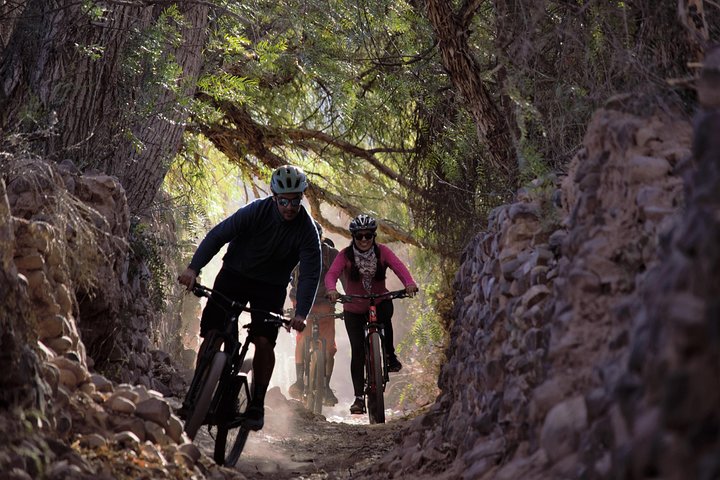
- Guided mountain-bike loop on dirt roads and singletrack
- Day trip to high puna lookout points and salt flats
BEFORE YOU GO
Your questions, answered.
Do I need a guide in Tilcara or can I explore on my own?
You can explore town and nearby archaeological sites independently, but hiring a local guide adds context, safer navigation on high routes, and access to remote cultural experiences.
Is altitude a concern and how should I prepare?
Tilcara sits at high elevation; allow a day to acclimatize if you come from low altitude, drink extra water, avoid heavy exertion on your first day, and monitor for symptoms of altitude sickness.
What’s the safest way to get to Tilcara from major airports?
Fly into San Salvador de Jujuy or Salta and take a rented car, private transfer, or regional bus to Tilcara; road travel is common and reliable, but check timing and road conditions during heavy rains.
How many days should I plan for Tilcara as a base?
Plan at least three nights to combine hikes, a visit to the Pucará de Tilcara, a scenic drive, and market time; five to seven days gives flexibility for side trips to salt flats or higher puna areas.
Are trail and weather conditions changeable?
Yes—weather can shift quickly, especially in summer with afternoon storms; verify current trail conditions locally and be prepared to pivot plans if routes are waterlogged or visibility is poor.
Is mountain biking available for varying skill levels?
Yes—there are dusty dirt roads and singletrack suitable for novice to advanced riders; local operators can pair you with appropriate routes and equipment.