THE ADVENTURE COLLECTIVE FIELD NOTES
A closer look at the journey.
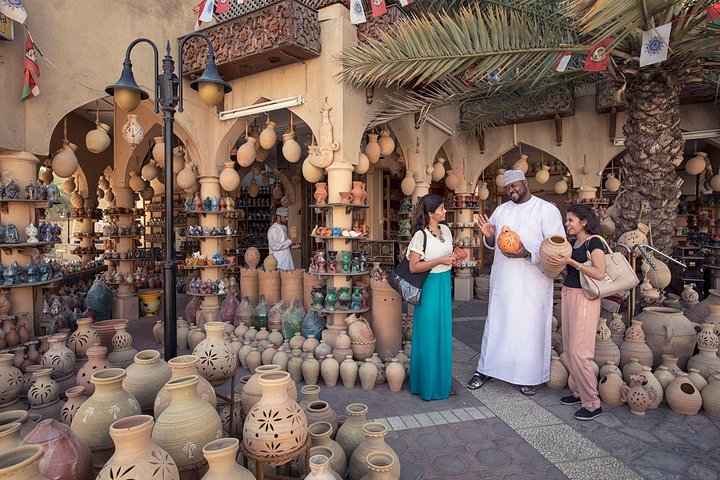
Morning light hits the ochre walls of Nizwa Fort like a slow drumbeat, and you can feel the city waking—merchants arranging khanjars, the air sweet with dates and cardamom. A day here moves fast: stone ramparts give way to narrow market alleys, then the landscape opens into the raw, wind-scoured spine of the Al Hajar Mountains at Jebel Shams.
Nizwa’s 17th-century fort was designed for defense and observation; its towering circular keep and hidden passages show how trade wealth and tribal power shaped interior Oman. Geologically, Jebel Shams is a limestone and sandstone escarpment carved by ancient rivers; Wadi Nakhr cuts a canyon whose vertical walls read like layered pages of the earth’s past. Local villages—stone houses, shaded terraces—keep traditional falaj irrigation and souq commerce alive, especially visible during the Friday auction.
Expect cultural contrast: the deliberate pace of the souq and the heady exposure of the Balcony Walk. The Balcony Walk hugs the rim with sheer drops that demand steady footing; weather can shift quickly, and the mountain often breathes cool air that jostles the senses.
Practical guidance: start early to avoid mid-day heat and to catch canyon light, bring at least 2 liters of water and sun protection, and wear closed shoes with grip for loose scree on trails. Photography windows are best at golden hour; allow time for market browsing and a simple lunch provided on most tours. Whether you’re here for history or high ridgelines, the route stitches human stories to a landscape that still feels primeval.
Things to know before you go
Hydrate for the desert-to-mountain day
Carry at least 2–3 liters of water; altitude and sun on Jebel Shams increase dehydration risk.
Sun protection is non-negotiable
Wide-brim hat, sunglasses and SPF are crucial—heat on the plateau and reflection from light rock intensify exposure.
Footwear for loose terrain
Closed, grippy hiking shoes make the Balcony Walk and short scrambling sections safer and more comfortable.
Plan for market timing
Visit the souq before or after the Friday livestock auction if you prefer calmer browsing; the auction is busiest midday Friday.
Your questions, answered.
How difficult is the Balcony Walk at Jebel Shams?
The Balcony Walk is a moderate ridge trail with narrow sections and gravel underfoot—no technical climbing required but steady footing and a head for heights help.
Are entrance fees included for Nizwa Fort?
Many organized day tours include guide and transport but fort entrance is often a small local fee—check your booking details and bring local currency.
Is this tour suitable for children or people with mobility limits?
The souq and fort have steps and uneven surfaces; while parts are accessible, the Balcony Walk and canyon viewpoints require mobility and are not recommended for those with limited mobility.
What’s the best time of year to visit?
October to April offers cooler days and clearer skies; early winter mornings can be cold on Jebel Shams while summer brings high heat in lowlands.