THE ADVENTURE COLLECTIVE FIELD NOTES
A closer look at the journey.
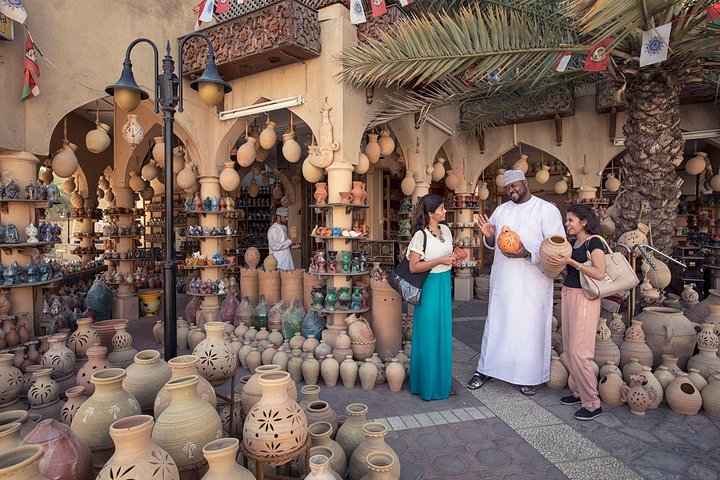
Dawn breaks over the Arabian Sea and Muscat rises in low, chalky light—white façades catching the first sun, fishing dhows rocking in the harbor as the call to prayer threads through the alleys. A private city tour moves through that rhythm: a cool stop at the Sultan Qaboos Grand Mosque, a bustling walk through Muttrah Souq, and a coastal run along the corniche where mountains lean close to the shoreline.
Muscat’s streets tell a layered story. Portuguese stone forts—Mirani and Jalali—stand guard from the 16th century, reminders of contested trade routes. The city sits at the edge of the Al Hajar range; rocky ridges drop sharply toward a narrow coastal plain, shaping mercantile ports and compact old neighborhoods. Culture here is tangible: frankincense, silver khanjars (daggers), Omani coffee rituals and a museum collection that traces seafaring, trading and Islamic arts.
On practical terms, the full-day private itinerary runs about 6–8 hours with short walking segments and photo stops. Respect mosque dress codes (long sleeves, long trousers, headscarf for women) and aim for morning visits to avoid midday heat. Shoes should be comfortable for paved souq alleys and museum floors; bring bottled water and sun protection—the coast will push warm, dry air inland.
Timing matters: start at the mosque, then move to Muttrah and the corniche before museums and the Opera House later in the day. Guides handle logistics and can adapt pacing; accessibility is generally good for wheelchairs in major stops. This is a city tour that balances easy walking with concentrated cultural and geological context—quiet history, seaside vistas, and practical rhythm for an efficient day in Oman’s capital.
Things to know before you go
Follow dress codes at the mosque
Wear long trousers and sleeves; women should carry a headscarf—some venues provide wraps but it’s faster to bring your own.
Start early to beat heat
Schedule mosque and corniche visits in the morning; museums and indoor sites work well in the warmer afternoon.
Cash for the souq
Bring small notes for bargaining and souvenirs—many stalls prefer cash over cards.
Hydrate and pace
Carry a reusable water bottle and take frequent breaks—walking is light but daytime temperatures can climb quickly.
Your questions, answered.
Is the Sultan Qaboos Grand Mosque open to non-Muslims?
Yes, it’s open to non-Muslims during morning hours except Friday; follow the published visiting hours and dress code.
Will the tour include entrance fees?
Some venues like the National Museum or Opera House require tickets—confirm with the operator whether admission is included in your booking.
How much walking is involved?
Walking is light to moderate—short strolls in the souq, promenades on the corniche, and brief walks around forts and museums.
Is pickup available from hotels or the port?
Private tours typically offer pickup and drop-off—provide arrival details when booking to arrange the transfer.