THE ADVENTURE COLLECTIVE FIELD NOTES
A closer look at the journey.
Morning light slices across the rim of Wadi Nakhr as the minivan climbs into the raw spine of Oman’s Hajar Mountains. Drivers pause at turns where limestone walls split open into the Grand Canyon of Arabia and the wind seems to press you forward toward the edge. The circuit links Nizwa’s markets and mud-brick fort with Ghul’s abandoned stone clusters, the cliff-side houses of Misfat, and the plateau of Jebel Shams — Oman’s highest peak.
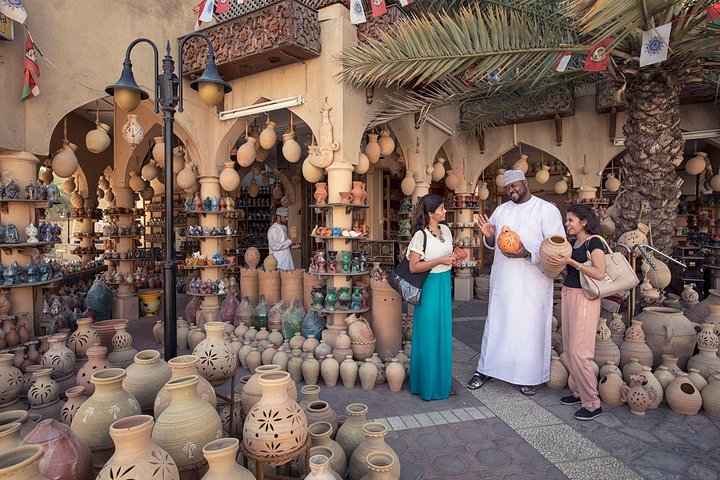
This route follows ancient trading tracks cut through uplifted limestone and volcanic beds; the canyon is the record of millennia of water and gravity carving deep into the range. Nizwa, once a regional capital, still hums with date stalls and silversmiths, while mountain villages preserve hand-woven rugs and dye techniques passed through generations.
On the ground expect mostly paved driving, brief walks on uneven village lanes, and rim-side viewpoints where the air thins and light sharpens contours. Guides commonly arrange a picnic at the canyon rim and a visit with a local weaver — bargaining is part of the experience. Nature here is deliberate: cliffs hold their silence, gullies steer the light, and the plateau can shift from baking sun to a cool breeze within an hour.
Practical guidance: wear sturdy closed-toe shoes for rocky lanes, carry 2–3 liters of water per person, use sun protection and bring layers for temperature swings. Plan 7–9 hours from Muscat, confirm Friday opening times for forts in advance, and respect private property in mountain villages.
Things to know before you go
Hydration is non-negotiable
Carry at least 2–3 liters of water per person; shops are limited above the plateau.
Wear sturdy shoes
Village lanes and rim viewpoints are uneven and can be loose underfoot — closed-toe shoes provide traction and ankle support.
Mind Friday schedules
Nizwa Fort and some attractions may close early on Fridays; confirm access before your trip to avoid disappointment.
Respect local customs
Ask permission before photographing people and avoid entering private houses without invitation; small purchases support local weavers.
Your questions, answered.
How long is the trip from Muscat?
Expect 7–9 hours round-trip depending on traffic, stops, and how long you linger at viewpoints and villages.
Can I visit Nizwa Fort on Fridays?
Fort opening times can be reduced on Fridays; confirm with the operator before booking if access is important to you.
Is the drive to Jebel Shams steep or technical?
The route uses paved roads and maintained mountain tracks with steep switchbacks; no technical driving skills are required for passengers.
Are purchases from local weavers negotiable?
Yes — friendly bargaining is common; bring small bills and be prepared to pay fair prices for handcrafted rugs and textiles.