THE ADVENTURE COLLECTIVE FIELD NOTES
A closer look at the journey.
The road out of Muscat climbs, and the Al Hajar range begins to assert itself: limestone ridges cut by the Samail Pass, guard towers and abandoned village walls catching the sun. You drive past Birkat Al-Mouz’s ruined houses, then descend into the market rhythms of Nizwa—spices, metalwork, and the clipped call of vendors negotiating over khanjars and brass dallahs.
This loop through A'Dakhiliyah moves through layers of Omani history. Nizwa was a medieval center of trade and learning; its round fort, 24 meters tall, still commands the plain. Nearby Jabrin Castle shows 17th-century domestic architecture and painted ceilings, while Bahla Fort—UNESCO-listed—recalls pre-modern earthwork techniques and the defensive logic of mud-brick construction. Tanuf’s ruins mark a more recent chapter: the 1950s Imamate conflicts and the Jabal Akhdar unrest that reshaped interior settlement.
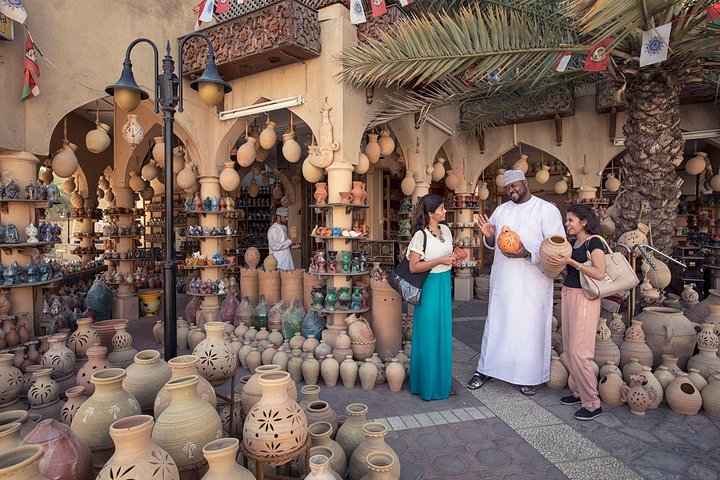
Geology matters here: wadis carve the crests, and the Samail Pass is a natural funnel through the Al Hajar—expect sharp contrasts of shadow and heat as you move elevation. Culturally, the souq is where craft lives; coppersmiths and silversmiths work in full view, and haggling is part of the exchange.
Practical guidance: this is a full-day, moderate-paced circuit—plan for 8 hours. Wear sturdy walking shoes for forts and uneven village ruins, bring sun protection and at least 2 liters of water, and carry small bills for souq purchases and fort admissions. Dress respectfully in lightweight, long-sleeved layers; mornings are coolest, late-afternoon returns can be warm. With attentive planning, the interior’s history and landscape deliver a compact, revealing day of Oman’s past and present.
Things to know before you go
Hydrate early and often
Carry at least 2 liters of water per person; shops in Nizwa sell refills but desert heat depletes you faster than you expect.
Dress respectfully
Choose lightweight long sleeves and a headscarf or cap—modest dress is appreciated in souqs and heritage sites.
Bring local currency
Small merchants and admission desks often prefer OMR notes and may not accept cards for small purchases.
Comfortable, grippy shoes
Wear closed-toe shoes with good traction for uneven fort surfaces and village ruins.
Your questions, answered.
Are entrance fees to forts included?
Entrance fees are typically not included in standard private transfers; bring small OMR notes to purchase tickets at each site.
Is hotel pickup provided in Muscat?
Most operators include pickup and drop-off from Muscat hotels—confirm your pickup point and time at booking.
Is this tour suitable for children or infants?
Yes; infant seats are often available and the pace is family-friendly, but expect active walking at forts and souqs.
What language and currency should I expect?
Arabic is the official language but English is widely spoken in tourism; Omani rial (OMR) is used for purchases and admissions.