THE ADVENTURE COLLECTIVE FIELD NOTES
A closer look at the journey.
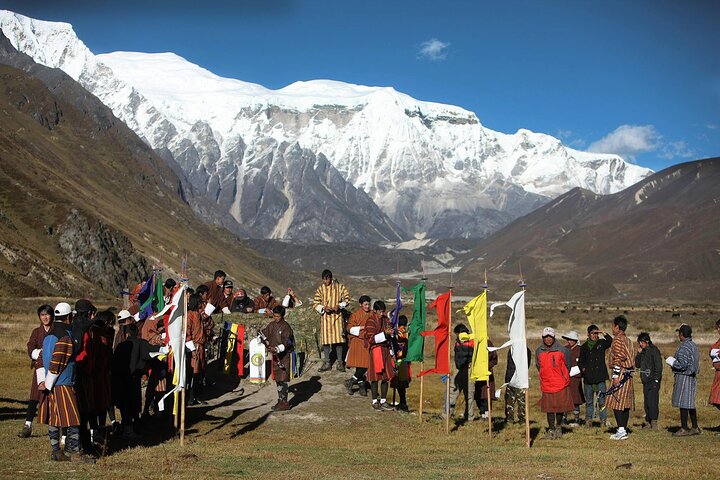
The valley air sharpens as you step off the jeep and the trail narrows into a ribbon of earth winding toward snowline. Green river meadows give way to alpine grasses; prayer flags tangle on ridgelines and yak bells punctuate mornings. This is the Jomolhari route — a high‑altitude loop that finishes with the two‑day Jomolhari Mountain Festival at Jangothang.
The loop threads history and geology: crumbling 17th‑century dzongs guard the Paro approaches and uplifted Himalayan beds rise abruptly from narrow gorges to glaciated peaks. Mount Jomolhari (7,326m) dominates the skyline above Jangothang (4,080m), where semi‑nomadic yak herders and blue sheep reflect a pastoral culture shaped by elevation and monsoon rhythms. The festival itself mixes masked dances, yak games and local conservation theater promoting snow leopard protection.
Expect sustained trekking at altitude: day stages range from 4–8 hours, highest passes near Bhonte La (~4,890m) and routine camps between 2,850–4,180m. Terrain is a mix of defined mule tracks, meadow crossings and steep mountain ascents with loose scree on higher passes. Full‑service camping with porters and ponies lightens the load, but acclimatization is non‑negotiable — two gradual ascent days precede the highest crossings.
Practical tips: plan flights into Paro and arrive several days early, carry layered insulation for cold nights, hydrate deliberately, and break in waterproof trekking boots. Festival dates are fixed in October; book international flights months ahead due to limited air links. Respect local customs at villages and keep camp waste packed out — fragile alpine ecosystems recover slowly.
Things to know before you go
Acclimatize before serious climbs
Spend at least two nights at 2,200–2,800m (Paro/Thimphu) before pushing above 3,000m to reduce altitude illness risk.
Pack for cold nights
Temperatures at 4,000m can drop well below freezing; bring an insulated jacket and warm sleeping layers even in autumn.
Use porters and ponies wisely
Full‑service camps include porters/ponies; limit personal pack to essentials to preserve energy on long ascent days.
Respect festival etiquette
Ask before photographing people, remove hats in temples and follow local guides during cultural events to avoid offense.
Your questions, answered.
When is the Jomolhari Mountain Festival held?
The festival is held annually in mid‑October (typically 14–15 October); this itinerary times arrival to attend both days.
How hard are the highest passes?
Passes like Bhonte La (~4,890m) are steep with loose sections — manageable for fit trekkers but weather and altitude make them demanding.
Do I need a visa and how long does it take?
All visitors require a Bhutan visa which is processed by the operator (e‑Visa in ~4–5 business days); passports must be valid at least six months from departure.
Are ponies available and is horse riding recommended?
Ponies and porters are used for gear; one‑way horse rides to Taktsang cafeteria are an option but not recommended for descents due to injury risk.