A VAYCAI STORY · THE ADVENTURE COLLECTIVE
Where the Goblins Gather: A Practical Ode to Goblin Valley State Park
Wander among sculpted stone forms and learn to read the desert’s erosional language.

On a low, wind-scrubbed plateau in central Utah the sandstone stands up like a crowd—bunched, bulbous, and improbably human in silhouette. Dawn drapes an orange ribbon across the courtyard of rock and the goblins come alive. They are not mythical creatures but the park’s nickname for the thousands of mushroom-shaped hoodoos—short, rounded towers of Entrada sandstone that seem to be caught mid-mutter or mid-dance. You walk among them and the world rearranges itself into a scale that shrinks the map in your pocket and makes your feet feel like an instrument for reading the landscape.
Goblin Valley State Park is compact—less than 15 square miles—but it delivers a concentrated lesson in erosion, solitude, and the high desert’s theater of light. The first hour after sunrise is when the stone indeed feels animated: warm, shadowed hollows create eyes and mouths; narrow washes dare you deeper into their lines. Families come for the otherworldly playground; climbers and photographers come to hunt angles; guided groups come for low-angle canyoneering and technical introductions that make the place a surprisingly active frontier.
Geology here is the show’s script. The hoodoos are carved from Jurassic Entrada Sandstone—deposited roughly 170 million years ago—by cycles of freezing and thawing, wind abrasion, and chemical weathering. Where the caprock resists erosion and the softer layers beneath give way, the goblins form. The landscape is a palimpsest; underfoot an older layer of Curtis Formation appears, mesas and slickrock dissolve into the sculpted pockets that define the park.
Culturally, the valley sits in the greater Colorado Plateau region, an area shaped by Indigenous presence and later by ranchers and Mormon settlers. The nearby towns—Hanksville, Green River, and the small communities strewn along Highway 24—offer practical bases and a quietly defiant hospitality that fits the spare surroundings. The valley also has a modern pop-culture footnote: parts of the 1999 sci-fi comedy Galaxy Quest were filmed here, an apt pairing of alien-set visuals and real-world oddness.
For travelers, Goblin Valley rewards a range of approaches. You can spend an hour looping a short interpretive trail and be satisfied; you can camp and stretch the day into stargazing; or you can sign up for a guided canyoneering session that threads you through narrow washes and requires scrambling, route-finding, and the kind of local knowledge that keeps you out of loose rock and off fragile pedestals. The standard guided option available through local outfitters is a roughly 4-hour canyoneering adventure—suitable even for fit beginners—where guides teach fundamental ropework and route choices while you skirt slot-canyon narrows and peer through natural alcoves.
Practical details are deceptively important here. Distances are short, but heat is honest: summer highs frequently hit the 90s–100s °F (32–38°C), and there’s little shade in the sculpted basin. Trails are largely unmarked beyond the main parking areas, which makes a map, an awareness of landmarks, and conservative timekeeping essential. The park has a campground offering tent and RV sites; cell service is intermittent, so plan for self-sufficiency and tell someone your plans. If you’re on a day trip from Salt Lake City, expect 3.5–4 hours of driving; from Moab it’s roughly 1.5–2 hours. The “Pick Your Park” private day tours from Salt Lake frequently include Goblin Valley as an option, pairing the valley’s surreal playground with nearby highlights depending on your route.
How to structure a visit: arrive at first light for a short loop to capture the stone in cool light, then break out for a guided canyoneering session mid-morning if the temperature allows. Break for lunch at the picnic areas and save the afternoon for easy walks, bouldering on the goblins’ bases, or an hour of solitude among the fins. If you’re camping, set up before twilight—Goblin Valley is remote enough to offer a cathedral-like night sky; the Milky Way often spills straight overhead.
Planning logistics and safety: sturdy footwear is non-negotiable. Sandstone can be slick when wet and crumbly where weathered. Carry four liters of water per person for day hikes in summer, and plan your ropes and technical gear through a guide service if you’re not comfortable leading canyons. The park is low elevation—around 5,000–6,000 feet—so sun management matters: wide-brim hats, high-SPF sunscreen, and lightweight layers that cover rather than just cool.
Leave No Trace is especially important here. The hoodoos are fragile; walking on top of the small pedestals accelerates erosion. Stay on designated paths where provided, and treat the goblins not as playgrounds to be reshaped but as formations to be admired. That ethic is common to area outfitters and park staff; when you book a guided canyoneering trip, you’re often simultaneously booking stewardship and education.
Goblin Valley isn’t about conquering peaks or earning vertical kilometers. It is about scale, curiosity, and the childlike permission to scramble over a landscape that looks like a fossilized carnival. For photographers it’s a dream of shapes and light; for families, a safe place to teach route-finding and respect for fragile environments; for solo travelers, a place whose quiet can push you toward small revelations—how long a day lasts in the desert, how bright stars can be when the neighboring towns go dark.
If you go, go with a plan but leave space for the whimsical: a midday nap against a sun-warmed boulder, a sudden detour into a wash that reveals a hidden amphitheater, the hush of dusk when the goblins stand like sentinels. Goblin Valley feels designed to keep your attention; it asks only that you respond with curiosity and do no harm.
Recommended bookable activities that amplify the experience: a local 4-hour canyoneering adventure introduces technical skills and safe passage through narrow slots and bowl-like alcoves; private day tours from Salt Lake City pair Goblin Valley with other Utah icons if you’re on a tight timeline. Both options add context, conservation-minded instruction, and the local knowledge that transforms a walk among the goblins into a fuller—and safer—adventure.
A few things worth knowing.
Go at sunrise or sunset
Light is everything here—soft morning and late-afternoon sun reveal texture and color while crowds thin out.
Book a guided canyoneering session
Local guides know safe routes and teach ropework and scrambling techniques tailored to the park’s sandstone terrain.
Carry extra water and a shade layer
Summer heat is intense; aim for 3–4 liters per person for half-day outings and wear sun-protective clothing.
Respect fragile formations
Don’t climb on thin pedestals or chisel the stone—walk only on durable surfaces and follow marked areas.
The local thread.
The area sits on the Colorado Plateau and contains Jurassic Entrada Sandstone; ranching and later recreational development shaped its modern access as a state park.
A closer look
- Chimney Rock overlook—short diversion for a panoramic view across the goblin field
- The lesser-used upper benches on the valley rim where morning light hits the formations differently
Wildlife you might see
- desert cottontail
- western rattlesnake (observe from a distance)
The park emphasizes visitor education and Leave No Trace practices to protect fragile sandstone; guided groups often include stewardship briefings.
A different story in every season.
spring
Spring offers cool temperatures and occasional wildflowers; watch for variable weather and slick sandstone after rains.
Good for
- wildflower displays
- mild hiking
- photography at golden hour
Plan around
- occasional spring storms
- mud in washes
summer
Summer brings long days and excellent nights for stars but requires strict hydration and early starts to avoid heat.
Good for
- extended daylight
- camping
- stargazing after sunset
Plan around
- high daytime heat
- scarce shade
fall
Fall is the sweet spot—cool days, brilliant light, and comfortable temps for canyoneering and photography.
Good for
- comfortable hiking
- color contrasts
- fewer crowds
Plan around
- cooler nights
- potential for sudden storms
winter
Winter can be peaceful with dramatic contrasts; bring insulated layers and be cautious of icy surfaces on ledges.
Good for
- snow-dusted landscapes
- quiet solitude
Plan around
- cold temperatures
- possible icy patches on sandstone
Pack a little wisdom.
- Sturdy hiking shoes with grippy solesEssential
Provides traction on sandstone and protection from sharp rocks.
- 3–4 liters hydration systemEssential
Keeps you hydrated in dry, hot conditions where water sources don’t exist.
- Sun hat and UV-protective layersEssential
Protects skin during long exposure to desert sun and helps regulate temperature.
- Compact camera with wide-angle lens
Wide lenses capture the scale and clustered shapes of the hoodoos best.
Through your own lens.
Shoot low and wide to convey the goblins’ scale; use a polarizer to deepen blue skies and reduce glare on sandstone. During sunrise/sunset bracket exposures to capture deep shadows and highlights, and include a person in-frame for scale.
Before you head out.
What to pack
Sturdy hiking shoes, 3–4L water reservoir, sun hat and sunscreen, compact first-aid kit—covering traction, hydration, sun protection, and basic emergency care.
Did you know?
The hoodoos in Goblin Valley are carved from Jurassic Entrada Sandstone deposited about 170 million years ago; portions of the valley were used as a filming location for the movie Galaxy Quest (1999).
Quick travel tips
Arrive early to avoid heat and crowds; fuel up in Hanksville or Green River—services are limited; check weather before heading into washes; book guided canyoneering in advance during peak season.
Local flavor
Nearby Hanksville and Green River offer small-town diners, a ranching legacy, and local guide services—their hospitality matches the region’s low-key, do-it-yourself ethos.
Getting oriented
Drive time: ~3.5–4 hours from Salt Lake City, ~1.5–2 hours from Moab. Park fee required; campground available; limited cell service; guided canyoneering typically 4 hours.
Travel with care
Stay on durable surfaces, avoid climbing fragile pedestals, pack out all trash, and follow guide instructions—small actions protect formations that took millions of years to form.
The questions before the journey.
Do I need a permit to hike in Goblin Valley State Park?
Day-use requires an entry fee at the park entrance; no special permit is required for general hiking, but commercial guided activities should be booked through licensed operators.
How long should I plan to spend at Goblin Valley?
A quick visit can be 1–2 hours; to explore more trails, boulder among the goblins, and take a guided canyoneering trip, plan half a day to a full day.
Is the park family-friendly?
Yes—many hoodoos are accessible for kids; however, supervise scrambling and keep children off fragile pedestals.
When is the best time to visit for photography?
Golden hour—early morning and late afternoon—offers the best light and fewer visitors for unobstructed shots.
Are guided canyoneering trips suitable for beginners?
Yes—local 4-hour guided canyoneering trips are often tailored to beginners while teaching basic rope and safety skills.
What should I know about camping at the park?
The park has a campground with tent and RV sites; services are basic, so arrive prepared and check the park website for reservations and seasonal availability.
Original editorial content from The Adventure Collective; some writing uses automated assistance. Conditions and operator details can change. Confirm practical information before your visit. Suggest a correction.
FROM THE PAGE TO THE PLACE
Make a little room for adventure.
Keep exploring the place and its experiences.
Looking for more options? Explore Goblin Valley State Park on Viator ↗
More ways to explore Utah
Other experiences in the destination; check the itinerary for the places visited.


Hurricane, United States
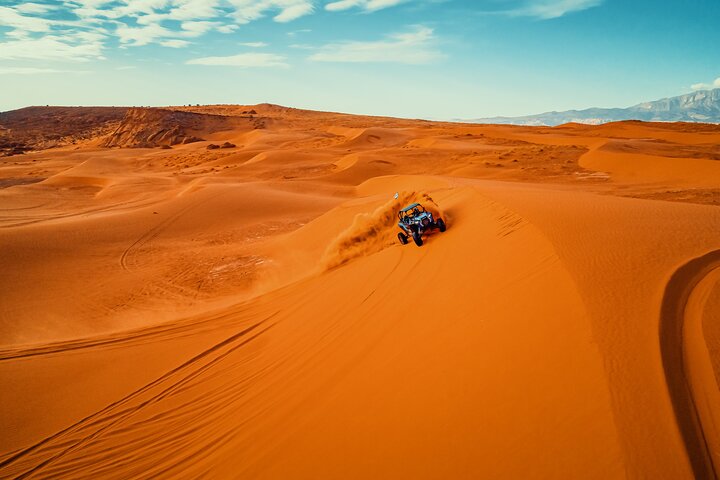
UTV Surf and Sand Dunes Ride at Sand Hollow State Park — 2-Hour Off-Road Adventure

Moab, United States
Edge of Canyonlands Helicopter Tour — Island in the Sky Aerial Flight (45 min)
Listed starting prices and ratings are saved information, not confirmation of availability. Final prices, dates, and terms are confirmed on Viator. We may earn a commission from qualifying bookings through sponsored links.
KEEP YOUR CURIOSITY GOING
One story leads to another.

Torrey · USA
Under the Fold: Exploring Capitol Reef’s Redrock Cathedrals and Secret Valleys
Capitol Reef is a compact cathedral of desert geology—narrow canyons, swooping domes, and off-grid valleys. Whether you hike under towering fins, ride with llamas into the Waterpocket Fold, or cross the Fremont River into Cathedral Valley, this is a place that rewards patience and preparation.
Read the story ↗
Escalante · United States
Staircase to the Sky: Exploring Grand Staircase-Escalante’s Labyrinth of Canyons and Hoodoos
Grand Staircase‑Escalante is a vast, layered desert of slot canyons, hoodoos, and sweeping panoramic ridgelines. This guide walks you through why the monument rewards careful planning—and how to experience its most accessible and spectacular hikes and tours.
Read the story ↗
Alta · United States
Alta Ski Area: Worshiping the Wasatch Powder
Alta Ski Area is where powder becomes practice. Deep snow, steep bowls and a skier-first culture combine in a compact, high-altitude playground just 40 minutes from Salt Lake City.
Read the story ↗