THE ADVENTURE COLLECTIVE FIELD NOTES
A closer look at the journey.
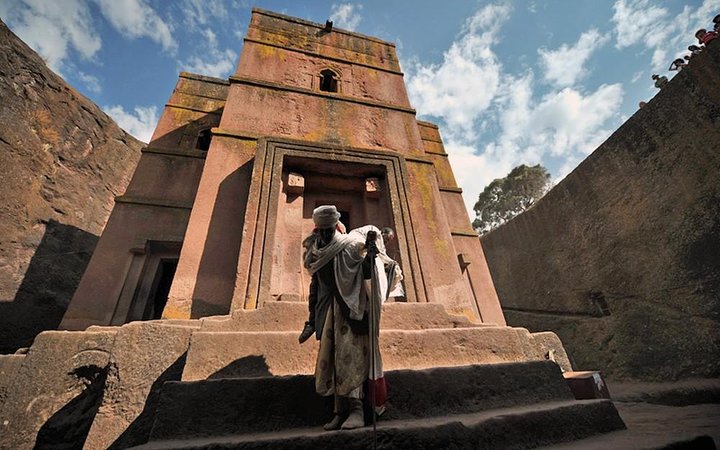
A morning light slices across a courtyard of worn stone as a small group threads between sun-warmed walls carved from living rock. The Lalibela walking tour leads you through narrow passages and stepped terraces where churches rise out of the plateau like ships anchored to the highlands. Guide voices mix with the murmur of prayers; wind and birds test the seams of cliff faces.
The eleven medieval rock-hewn churches date to the 12th–13th centuries, commissioned under King Lalibela to recreate a Christian Jerusalem. Geologically, the structures are carved from volcanic tuff—relatively soft when cut but remarkably durable—so the patterns of erosion and repair read like a timeline of human care. Culturally, Lalibela remains an active pilgrimage site: liturgy, candles and local dress are part of the itinerary as much as architecture.
Expect uneven stone steps, low passageways and short uphill stretches between clusters of churches. A private guide explains frescoes, baptismal pools and the monastic rhythms that still govern the site. Photographic stops are frequent but regulated; some interiors restrict images to preserve pigments.
Practicalities: tours run as full-day experiences (guides often combine sites and village walks), so plan for 8–12 hours on foot, sun exposure, and intermittent shade. Carry water, wear stable footwear and dress modestly—shoulders and knees covered—out of respect for worshippers. Morning light and late afternoon offer the most dramatic views and cooler walking. Follow your guide’s requests around restricted areas to protect fragile stone and sacred objects.
Things to know before you go
Start early
Begin at first light to avoid crowds and take advantage of cooler temperatures and softer light for photos.
Wear sturdy shoes
Uneven ancient stone and slippery steps demand closed-toe footwear with good grip.
Respect worship areas
Some churches are active chapels—follow your guide’s rules on photography and where to stand.
Hydrate and pace
Carry at least 1–2 liters of water and allow time between sites—altitude and sun make the day more demanding.
Your questions, answered.
How long is the walking tour?
Tours are full-day, typically 8–12 hours depending on which churches and nearby sites are included; some private tours can extend up to 18 hours with additional village visits.
Are the rock churches accessible for people with mobility issues?
Many areas have steep, narrow steps and low passages; accessibility is limited—discuss mobility needs with the operator before booking.
Is photography allowed inside the churches?
Photography rules vary by church; some interiors restrict photos to protect pigments and for religious reasons—follow your guide’s direction.
Do I need to book a guide?
Yes—local guides are required at many sites and enhance understanding of history, liturgy and conservation practices; private guides are offered for this tour.