THE ADVENTURE COLLECTIVE FIELD NOTES
A closer look at the journey.
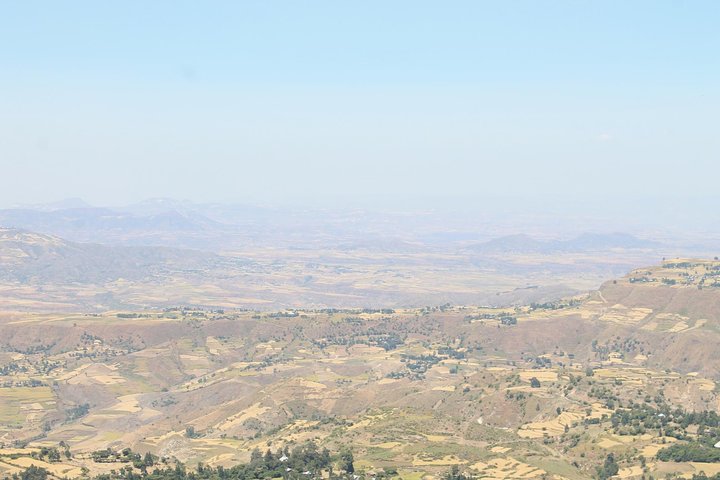
You step out of Lalibela into thin, bright air and the trail immediately begins to climb. Porters and local guides thread ancient footpaths that run along basalt ridgelines; grasses and giant lobelias sweep past as the village roofs fall away beneath you. By late afternoon the sky stretches wide and cool above Rim Gedel (4,284 m), where the ridge holds a view you can feel in your lungs as much as your eyes.
This route crosses a section of the Ethiopian Highlands shaped by volcanic uplift and deep erosion: basalt plateaus give way to afro-alpine heath and steep escarpments. The trek visits small 13th-century monastic sites such as Asheten Maryam and follows routes that local Agew and Amhara communities still use for trade and grazing. Wildlife is a highlight — gelada troops graze on cliff terraces and, with luck and patience, you may glimpse a rare Ethiopian wolf on higher slopes.
Expect 3–6 hours of walking on trekking days, rocky tracks, short scree sections near the summit, and community guesthouses or simple camps each night. Guides and porters handle navigation and most logistics; meals are included. Practical planning is straightforward: allow time to acclimatize in Lalibela, carry layered clothing for cold alpine nights, and come ready for sustained uphill hiking at altitude. The route rewards steady, fit walkers with close wildlife encounters, wide highland panoramas, and a clear sense of place where culture and geology meet on the ridge.
Things to know before you go
Acclimatize before you go
Spend a night or two in Lalibela to adjust to altitude; ascend gradually and watch for signs of AMS.
Sturdy boots and traction
Paths include rocky and scree sections—ankle-supporting, broken-in boots and trekking poles reduce fatigue and slips.
Carry water and snacks
Daily walking can be 3–6 hours with limited resupply—bring 2–3 liters and high-energy snacks for the trail.
Respect local customs
Guesthouses are community-run; ask before photographing people and follow guides' advice about village etiquette.
Your questions, answered.
How long are the daily walks?
Most days involve 3–6 hours of trekking, with the longest day approaching a sustained 6-hour ascent to higher camps.
Do I need prior high-altitude experience?
Prior experience with multi-day hiking is strongly recommended; while guides manage route-finding, altitude can be demanding.
What accommodations are provided?
Nights are in community guesthouses or simple camps; facilities are basic but meals are included and prepared by local hosts.
When is the best time to trek Abune Yosef?
The dry months after the rainy season (October–March) offer firmer trails and clearer views; heavy rains in the summer can make trails slippery.