THE ADVENTURE COLLECTIVE FIELD NOTES
A closer look at the journey.
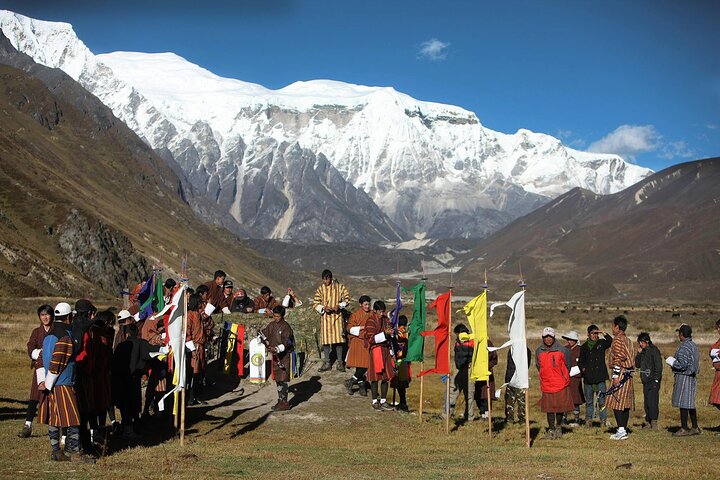
High on the frontier between Paro and Thimphu, the Dagala ridges wake slowly under thin air and a cold light that sharpens every silhouette. Hikers set off from Genekha to cross grassy saddles and granite shoulders where dozens of clear, high-altitude lakes reflect sky and the ragged crowns of Everest, Jomolhari and Jichu Drake.
The route threads through yak pastures and semi-nomadic camps, following paths shaped by glacial melt and centuries of herder travel. Geologically the corridor is carved by repeated glaciation and moraine action; the lakes are mostly tarns and moraine-dammed basins sitting between 3,200–4,700m. The area carries cultural weight: small village temples, yak-herder huts, and remote gompas like Talakha offer a glimpse of Bhutanese rural life and Buddhist practice.
Expect 6 days of trekking embedded in a 10-day itinerary — daily stages range from 7–12 km with ascents up to roughly 1,200 m and passes reaching about 4,720 m. Camps are full-service with ponies and porters; 3-star hotels bookend the trek in Paro and Thimphu. Nature here is not passive — wind and sun push the ridge-lines, and lakes mirror the sky until a gust scatters the surface.
Practical essentials: allow time to acclimatize, bring sturdy waterproof boots, layered insulation, and a good sleeping bag (liners provided). The best windows are March–June and September–November when trails are stable and wildflowers or clear vistas are most likely. Permits and e‑visa are handled in advance; plan international flights early. For trekkers comfortable at altitude, Dagala delivers high-mountain solitude, crisp lakeside mornings and wide Himalayan panoramas with practical, well-supported camping along the route.
Things to know before you go
Acclimatize before heavy gain
Spend at least a day in Paro or Thimphu before starting the trek and avoid rapid ascent to reduce altitude sickness risk.
Layer for large temperature swings
Days can be warm while nights freeze—pack a warm mid-layer and a waterproof shell for wind and sudden rain or snow.
Use trekking poles on long descents
Poles reduce knee strain on steep drops from passes like Tale La and improve balance on loose scree.
Hydrate and monitor urine color
High-altitude dehydration comes quickly; drink regularly and carry electrolyte mixes to maintain energy and reduce AMS risk.
Your questions, answered.
Do I need a permit to trek the Dagala Thousand Lakes?
Yes — trekking permits and the national e‑visa are required. This program handles permits and visa processing after you submit passport copies.
How difficult is the acclimatization on this trek?
The trek reaches passes near 4,720 m, so acclimatization is important; the itinerary includes rest and gradual gains but prior high-altitude experience is recommended.
Are tents and food provided on the trek?
Yes — full-service camping, meals, porters and ponies for equipment are included during camping nights; a sleeping bag liner is provided.
When is the best time to go?
March–June and September–November offer the most stable weather, clearer views and lower likelihood of deep snow on high passes.