THE ADVENTURE COLLECTIVE FIELD NOTES
A closer look at the journey.
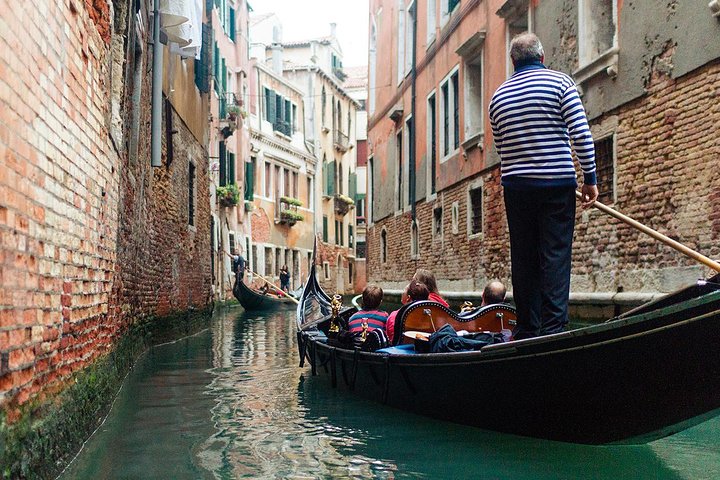
You step out from under the arcade and the air changes—salt, stone, the steady murmur of water against wood. The guide cuts left into a thinning maze of calli where bells and voices bounce off centuries-old facades, and the city stops being a map and starts being a neighborhood. This is Venice away from the busiest promenades: a walking tour that threads through Rialto’s market hum, points a finger at the faded plaque claiming Marco Polo’s house, and pauses to explain La Fenice’s theatrical comebacks before delivering you to a black-hooded gondola bobbing like a storybook on a quiet canal.
Venice sits on a brackish lagoon built of silt and stone; the city’s narrow canals and arched bridges are the practical answers to a geological problem. The guides on this 2½-hour route translate that layered history—Byzantine trade wealth, Renaissance palazzi, and 19th-century restorations—into small, memorable lessons. At the Gondola Gallery you learn how the iconic boat balances asymmetrically, why the forcola (oarlock) is sculpted like a hand, and how carpentry traditions persist in small workshops. There’s also a virtual gondola segment that stitches past and present, so even before you glide off you understand what you’re riding.
Culturally the tour favors local stories over souvenir-shop lore: which campo serves the best cicchetti, where La Fenice’s ashes still shape the theater’s reconstructions, and why the Rialto was the city’s commercial spine. Nature plays its role, too—the lagoon dares you with tides, and the city's stones remember centuries of water.
Practicalities matter: the meeting point is Campo San Gallo beside St. Mark’s Square; expect a 5–10 minute walk between highlights and a deliberate gap between the walk and the 30-minute shared gondola ride. Tours may be bilingual and operate up to groups of 15; gondolas seat up to five and seats are assigned by the gondolier for balance. The operator cancels or reschedules in cases of exceptional high tide (acqua alta), and on certain days visitors must pay a €5 city access fee—check current rules before you arrive.
What to pack: comfortable, grippy shoes for uneven stone; a lightweight rain layer for sudden water and wind; a small day pack for valuables; and a fully charged phone for photos and the audio commentary you’re asked to download. Arrive five minutes early, avoid large suitcases in the route, and leave room in your plan for a vaporetto ride afterward to St. Giorgio or across the lagoon.
This is an experience that pairs context with a quintessential Venetian moment: a measured walk through history followed by a slow, purposeful glide through canals that still carry the city’s stories.
Things to know before you go
Download the audio before you go
The gondola segment includes an audio commentary—download the app’s files ahead of time to avoid connectivity hiccups.
Expect gaps between activities
There is a scheduled gap between the walking portion and the gondola ride—use it to visit the Gondola Gallery or get a quick espresso nearby.
Mind the acqua alta
Tours may be postponed or refunded in cases of exceptional high tide; keep an eye on local tide forecasts and the operator’s communications.
Dress for uneven streets
Sturdy, comfortable shoes are essential—Venetian stone and bridges are irregular and often wet.
Your questions, answered.
How long is the gondola ride?
The gondola portion is a shared 30-minute ride and can accommodate up to five people per gondola.
Where do we meet the guide?
Meet at Campo San Gallo beside St. Mark’s Square; the operator asks you to arrive five minutes before departure.
Can I choose my seat in the gondola?
Seats are assigned by the gondolier to balance the boat and take into account guests’ weight distribution.
What happens if there is high tide?
The tour may be postponed to the following day or refunded in cases of exceptional high tide (acqua alta); the operator will inform you if the tour can’t operate.
Is the tour accessible for people with limited mobility?
The tour is rated easy, but Venice’s bridges and steps make full wheelchair accessibility difficult—contact the operator for specific accommodations.
Do I need cash for anything extra?
Most inclusions are covered, but you may need small change for a coffee, tips, or the occasional €5 city access fee on certain dates.