
Hilo, United States
East Big Island Waterfall Hike and Swim — Rainforest Trail to a Pristine Pool
from $99.99USD

VAYCAI · ATTRACTION GUIDE
Chain of Craters Road pairs a dramatic scenic drive with short hikes through recent lava landscapes and coastal viewpoints. Stack a morning drive with crater-rim walks, a lunchtime picnic on blackrock overlooks, and an evening stargazing session; the route is ideal for combining photography, easy hiking, and guided volcano interpretive experiences.
Your guide to places, experiences, and adventures.
Get to know the place


THE GOOD STUFF STARTS HERE
Hilo, United States

Hilo, United States

Hilo, United States

Hilo, United States


Hilo, United States


Hilo, United States

Hilo, United States
Listed starting prices may vary by option, travel date and group size. Confirm the final total and availability on Viator. Sponsored links: we may earn a commission from qualifying bookings.
GET TO KNOW THE PLACE
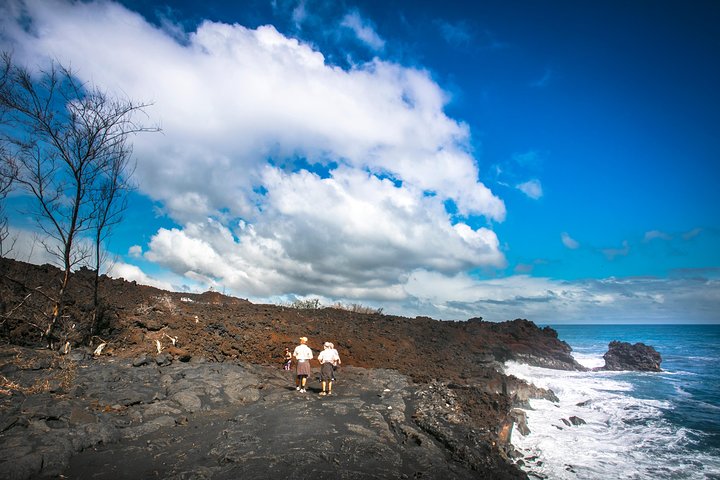
The road unspools like a geology primer: every mile reveals fresh textures of lava, new coastline, and the patient work of Kīlauea. It's a place where landscape feels alive—rock that was fluid yesterday now holds as hard coastline, wind and surf nudging at its edges. For travelers, the pull is immediate: short hikes, dramatic views, and the rare chance to watch an island remake its own shorelines.
Drive down from the park’s higher rainforest and the terrain changes as if someone flipped a switch. Ferns and ʻōhiʻa stand shoulder-to-shoulder with fields of black rock; steam rises where the ocean meets newly cooled lava and gulls wheel above. The road threads past old flows, road closures, and pullouts that make for good short walks and photo stops. Geologically this is recent Earth—pahoehoe and ʻāʻā textures, collapsed pit craters, and patched-over roadbeds—so bring boots that can handle jagged glassy rock and a readiness to step carefully. The land here has a voice: it cools, it cracks, and it holds views differently from any green valley.
Chain of Craters Road sits inside Hawaii Volcanoes National Park, a living museum of volcano science and Hawaiian culture. Native Hawaiian practices and names are woven through the landscape, and interpretive signs at pullouts give context about the island’s creation stories and modern monitoring efforts. Plan your timing: mornings are cooler and typically less windy, while late afternoon offers warmer light but more wind and possibly vog. The road itself is linear and easy to stack with other park highlights—short rim walks, lava tubes, and visitor center stops. Practically, allocate a half-day to a full day if you intend to hike a few spur trails, photograph the coast, and eat without hurrying.
Safety and access are simple to manage with a little forethought. Road sections can close or change with new flows and storm runoff, so check park notices before you head out and carry water, sun protection, and an offline map. Sunrise and sunset amplify the textures—bring headlamps if you linger—and allow spare time for unplanned stops; the landscape insists on detours. For the most satisfying visit, ease the pace: let the drive punctuate short hikes, linger at the coast for wind-and-wave drama, and save time to absorb how quickly the island’s surface can rewrite itself.
PLAN YOUR VISIT
April, May, September, October
Hilo-side weather tends to be wetter and greener; the coast and lower elevations are drier but can still produce brief showers. Trade-offs: spring and fall often bring stable trade-wind conditions and fewer crowds.
Busiest periods are holiday weeks and summer months; if visiting then, start early, book lodging well in advance, and expect more cars at pullouts.
Shoulder seasons offer quieter roads, better hotel rates, and calmer photo opportunities, but expect occasional rain and slick lava surfaces—choose routes accordingly and pack traction footwear.
PACK WITH PURPOSE
FIND YOUR PACE
For experienced outdoor travelers seeking backcountry routes, extended volcano-focused photography, and complex logistics.
Perfect for travelers who want scenic drives, short walks, and easy access to dramatic viewpoints without challenging terrain.
For those comfortable on uneven terrain and longer walks who want to combine hikes with photography and coastal exploration.
BEFORE YOU GO
No special permit is required to drive the road; entrance to Hawaii Volcanoes National Park requires a park entry fee or pass, and guided commercial activities may require reservations.
Lava visibility varies with volcanic activity and safety restrictions; some periods allow distant viewing while others do not—check park updates and join guided tours for safe viewing options.
Yes; the paved road is suitable for standard vehicles, with many pullouts for short walks and photo stops, but supervise children near cliffs and uneven lava fields.
Allow at least half a day to drive the route, stop at viewpoints, and take a couple of short hikes; plan a full day if you want to explore multiple trails or wait for sunset.
Both are good options: self-guided visitors can move at their own pace, while guided tours provide interpretation, safety guidance around recent flows, and logistics for where to safely view volcanic features.
Expect sudden showers, wind, and roadway changes due to volcanic activity; check park alerts before departure and carry layers, waterproof protection, and flexible plans.